
Stone cannot be
sent back for a refit.
A wrong shade or a misspelt name is not a repair — it is a replacement, six weeks and a second freight bill away. So the checking happens here, at eight points between the quarry face and the sealed container door.
Eight checks,
none of them at the end.
Inspecting a finished container tells you what went wrong. Checking at each stage stops it going wrong — which is the only version that helps either of us.
 At the quarry face
CheckedBefore the block moves
Shade against the order, grain direction, and cracks or seams that would open on the saw.
 Block to slab
CheckedAs it comes off the gangsaw
Every slab checked for shade drift down the block, then sequence-numbered so the batch stays together.
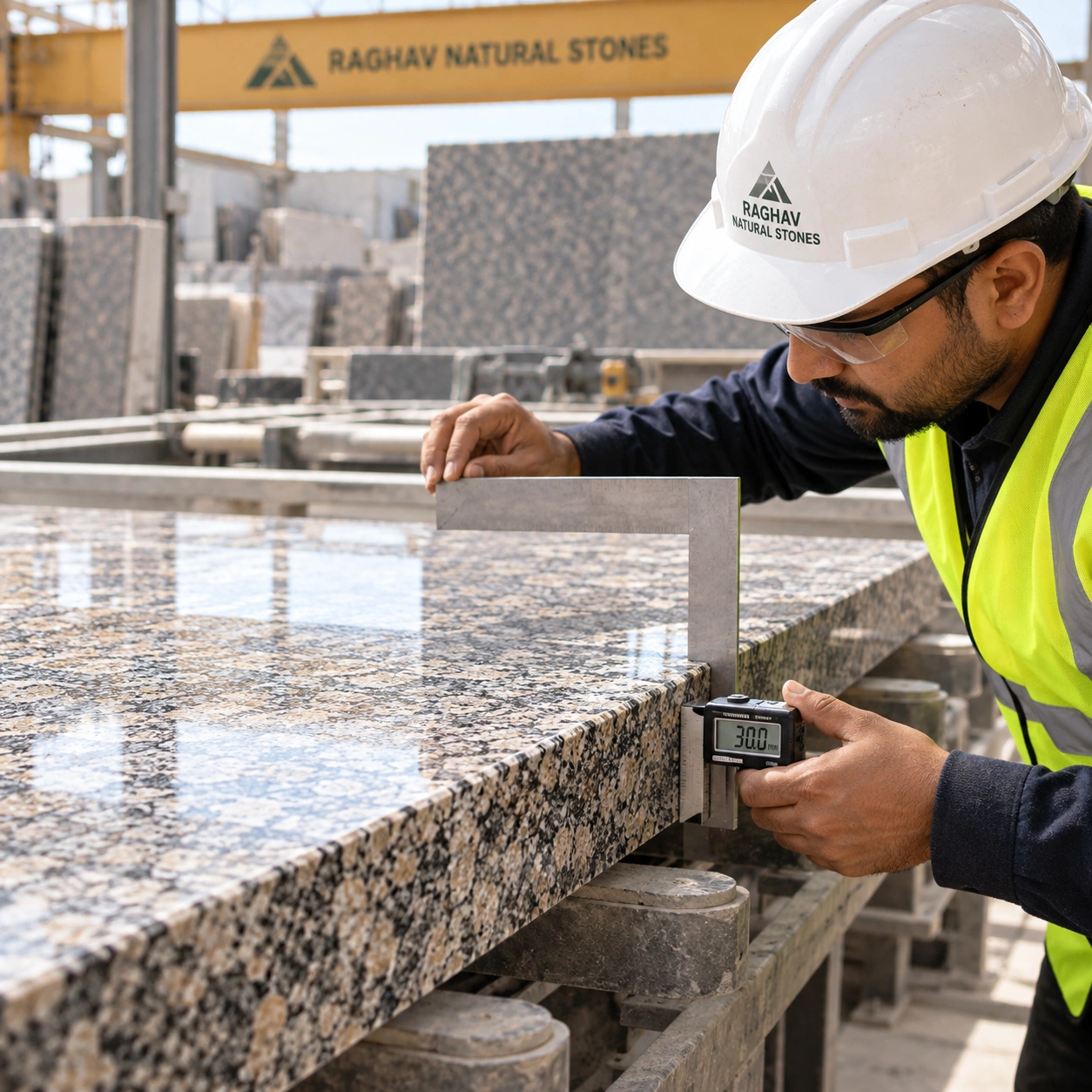 Thickness & squareness
CheckedOn the line
Calibrated stock measured across the sheet, and diagonals checked so tiles set flat and joints close.
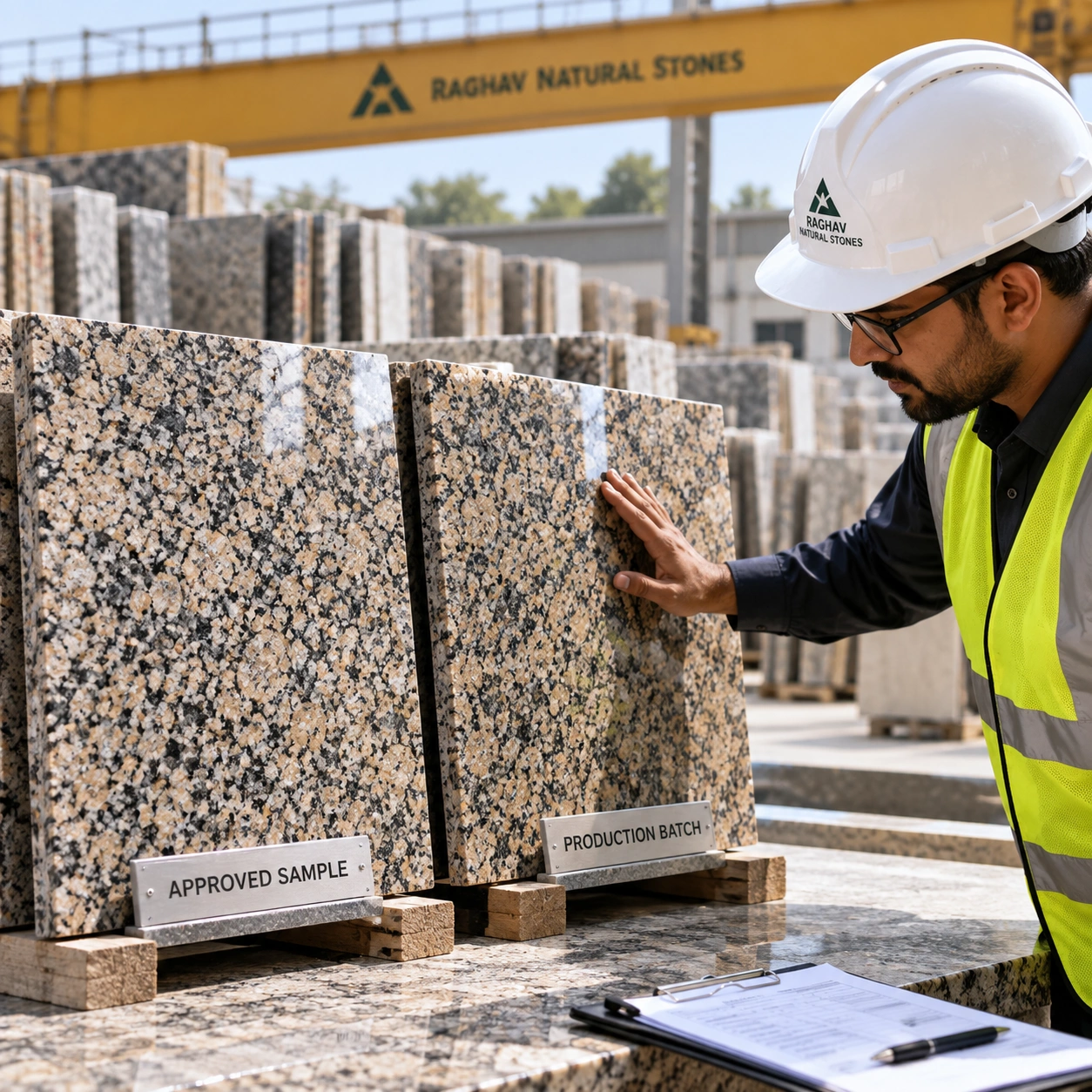 Finish
CheckedSample against production
The approved sample stays in the works and every batch is laid beside it before packing.
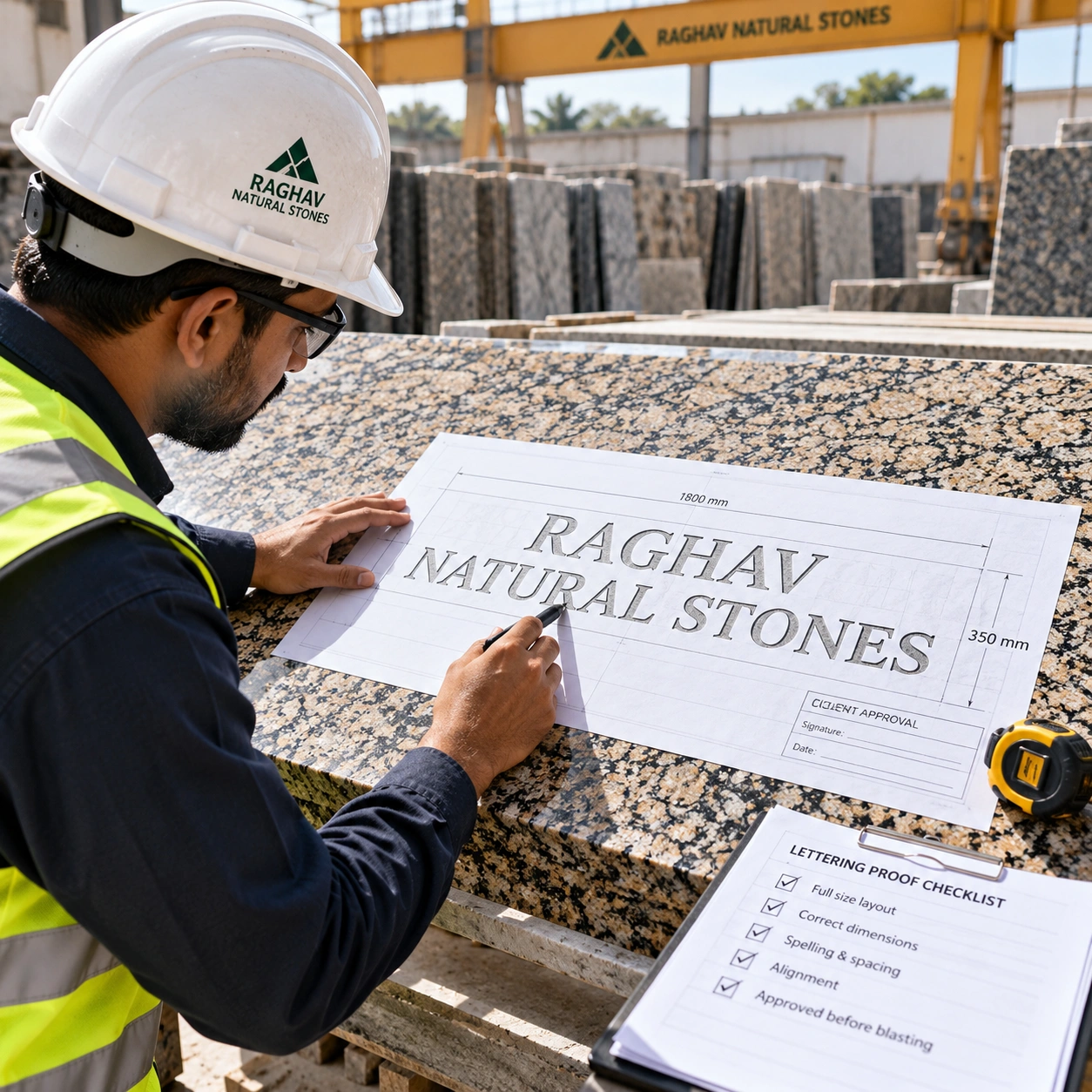 Lettering proof
CheckedBefore any blast
The layout goes back at full size with every character as it will be cut. Nothing is blasted until it returns signed.
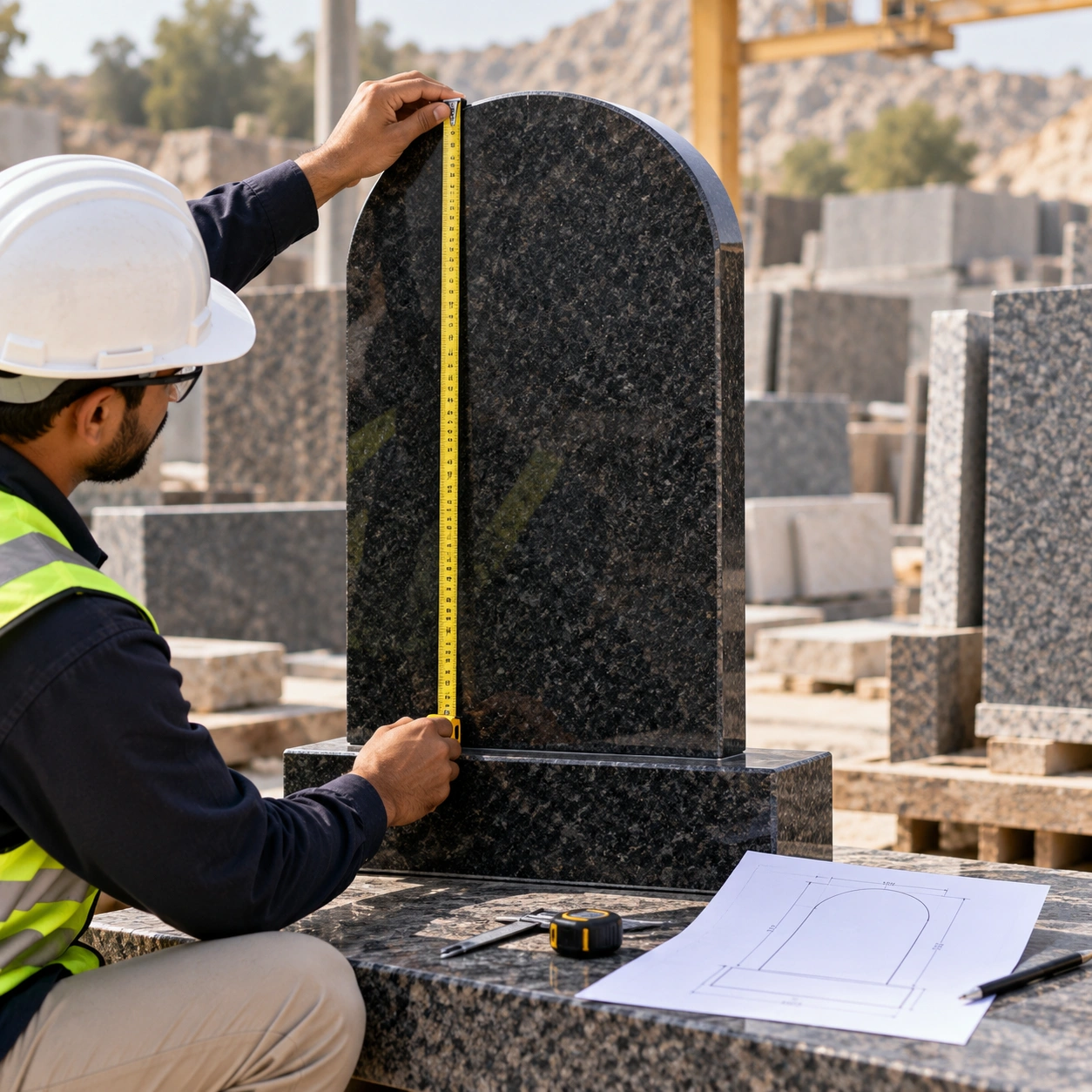 Dimensions
CheckedPiece by piece
Each finished unit measured against the signed drawing, with the numbers recorded on the inspection sheet.
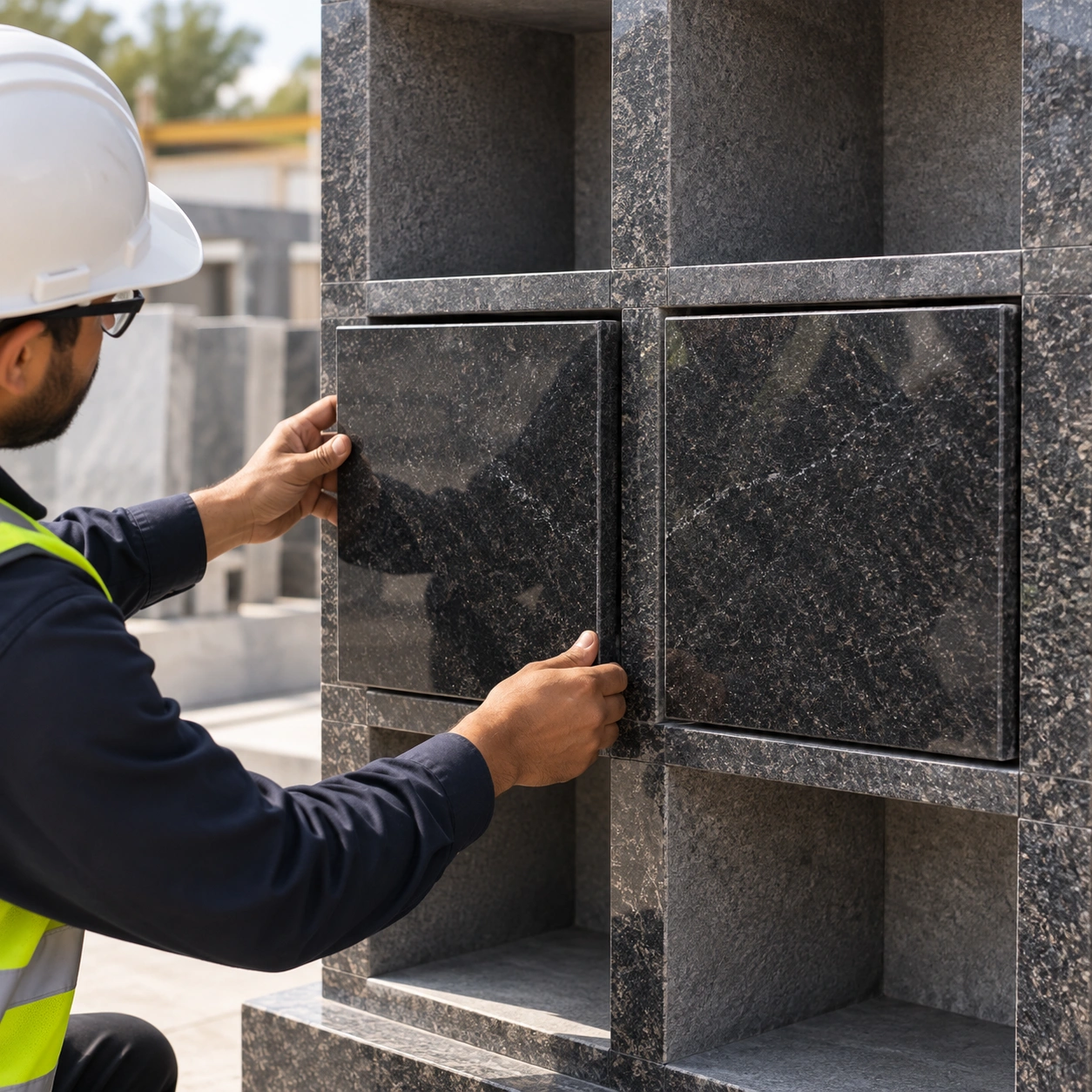 Seal & fit
CheckedTrial assembly
Niche fronts offered to their own openings, crypt fronts to their crypts, chapels dry-built in full.
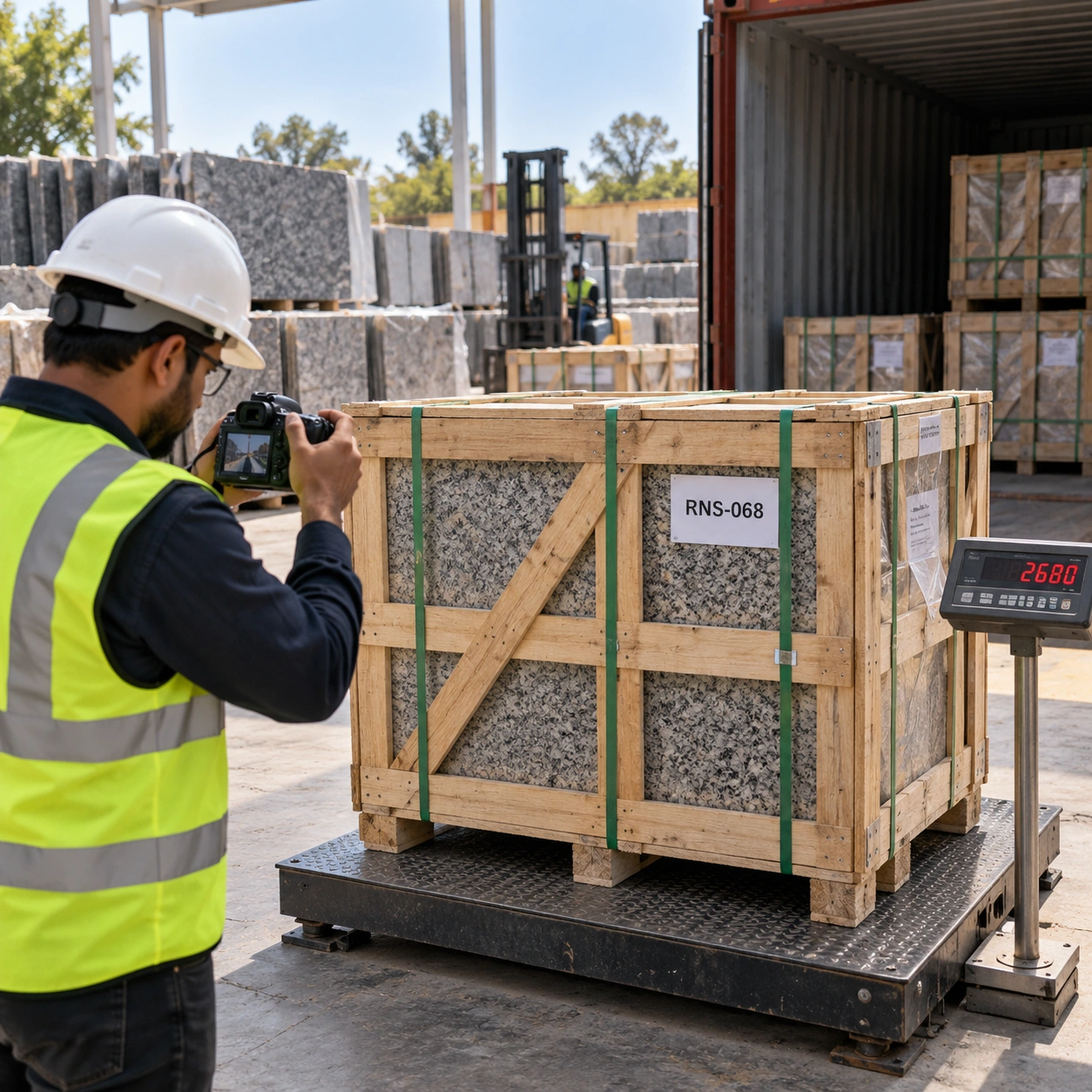 Crate & load
CheckedPhotographed
Every crate weighed, numbered and photographed, then the container photographed as it is stuffed and sealed.
The approved sample does not go back to you — it stays here and every batch is laid beside it before packing. A finish agreed in March and a repeat order in November are judged against the same piece of stone, not against a memory of it.
Four tests,
and what each is for.
Reports come from an independent laboratory, for the stone actually supplied. Ask for them per consignment rather than per stone type.
- Water absorptionLow is what mattersDecides how a stone behaves in freeze-thaw and coastal air. The single most useful number on a granite report.
- DensityMass per unit volumeFeeds the crate weights and the structural calculation for cladding and heavy units.
- Flexural strengthBending under loadRequired for cladding, treads and any panel spanning a support.
- Abrasion resistanceWear underfootSpecified for floors, paving and plazas that take traffic.
A test certificate for "Absolute Black" in general proves very little. Ask for the report on the consignment you are buying — that is the one an architect or a cemetery board can actually rely on, and it is the one we issue.
What arrives
with the container.
Paperwork that lets you check the load without opening every crate, and that a carrier or insurer will accept if anything has gone wrong on the way.
- Inspection sheetPer consignmentPiece list with measured dimensions, finish and the block run each came from.
- PhotographsPer cratePieces before packing, crates numbered, and the container as it is stuffed and sealed.
- Test reportsOn requestIndependent laboratory results for the stone supplied, not a generic certificate for the stone type.
- Packing listPer crateContents, weights, marks and lifting points, keyed to the crate numbers.
Send an inspector,
or send a drawing.


