
Stone survives the sea.
It is the road that breaks it.
A container is handled four or five times after it leaves the vessel. We pack for that leg — faces boarded, arrises taped, crates braced and weighed, and every one numbered to the packing list.
Six ways
it travels.
Packing follows the format, not the order value. A single vase is boxed as carefully as a monument, because it is the small pieces that get lost and chipped.
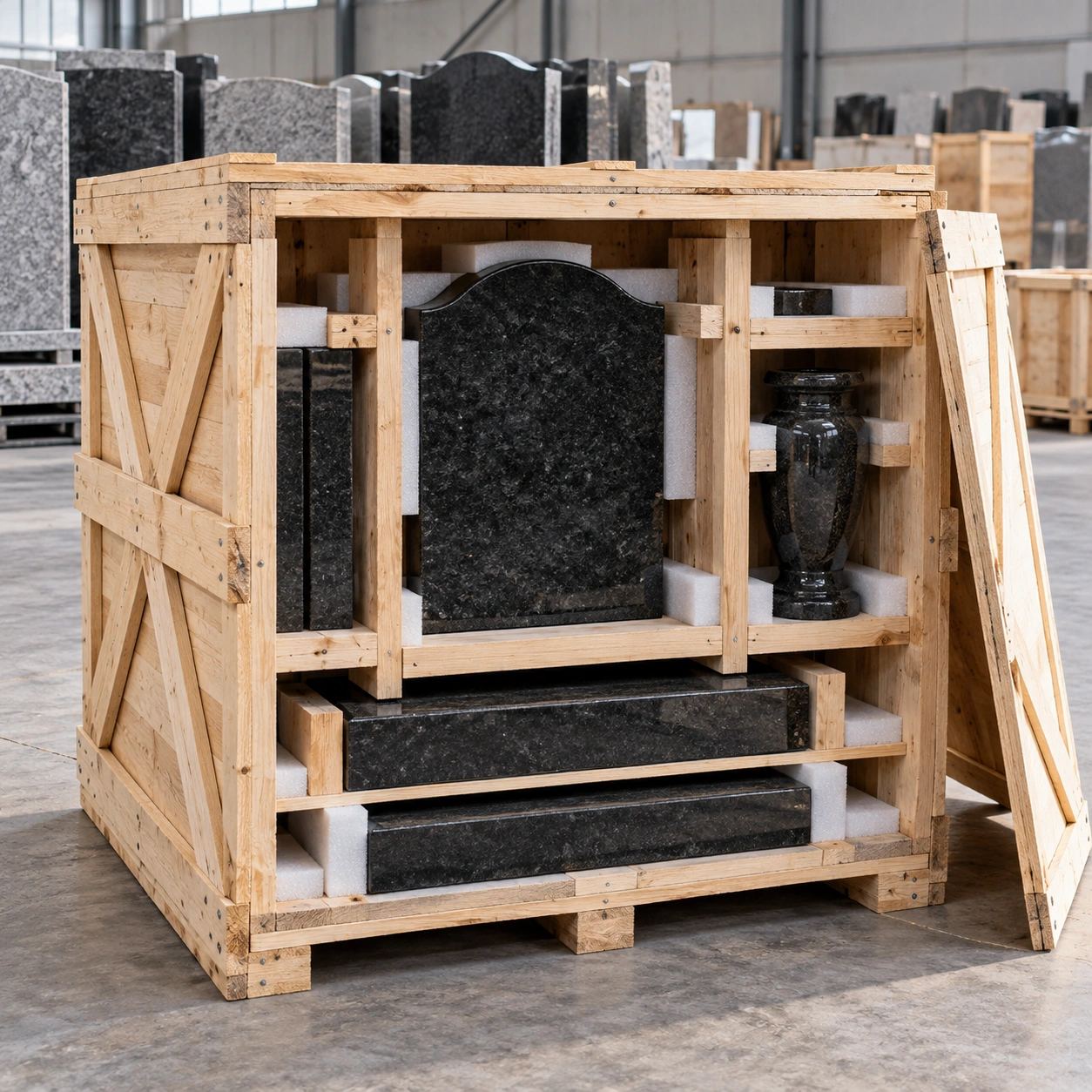 Wooden crate
Used forMonuments, cut-to-size
Fumigated timber, braced inside, faces boarded and foam-separated
 A-frame
Used forGangsaw slabs
Slabs stood on edge against a steel or timber A-frame, strapped
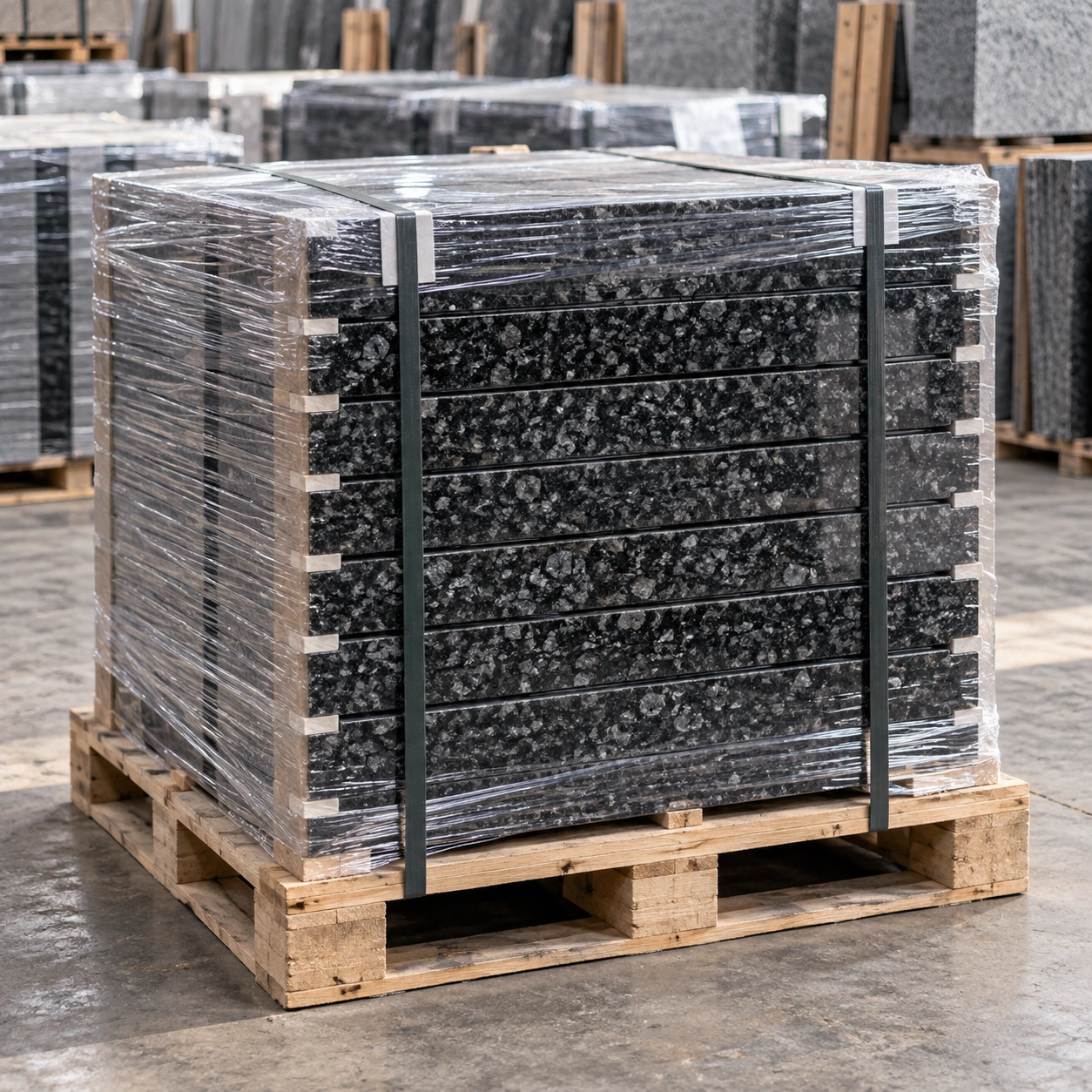 Pallet
Used forTiles, calibrated stock
Stacked face to face with separators, banded and shrink-wrapped
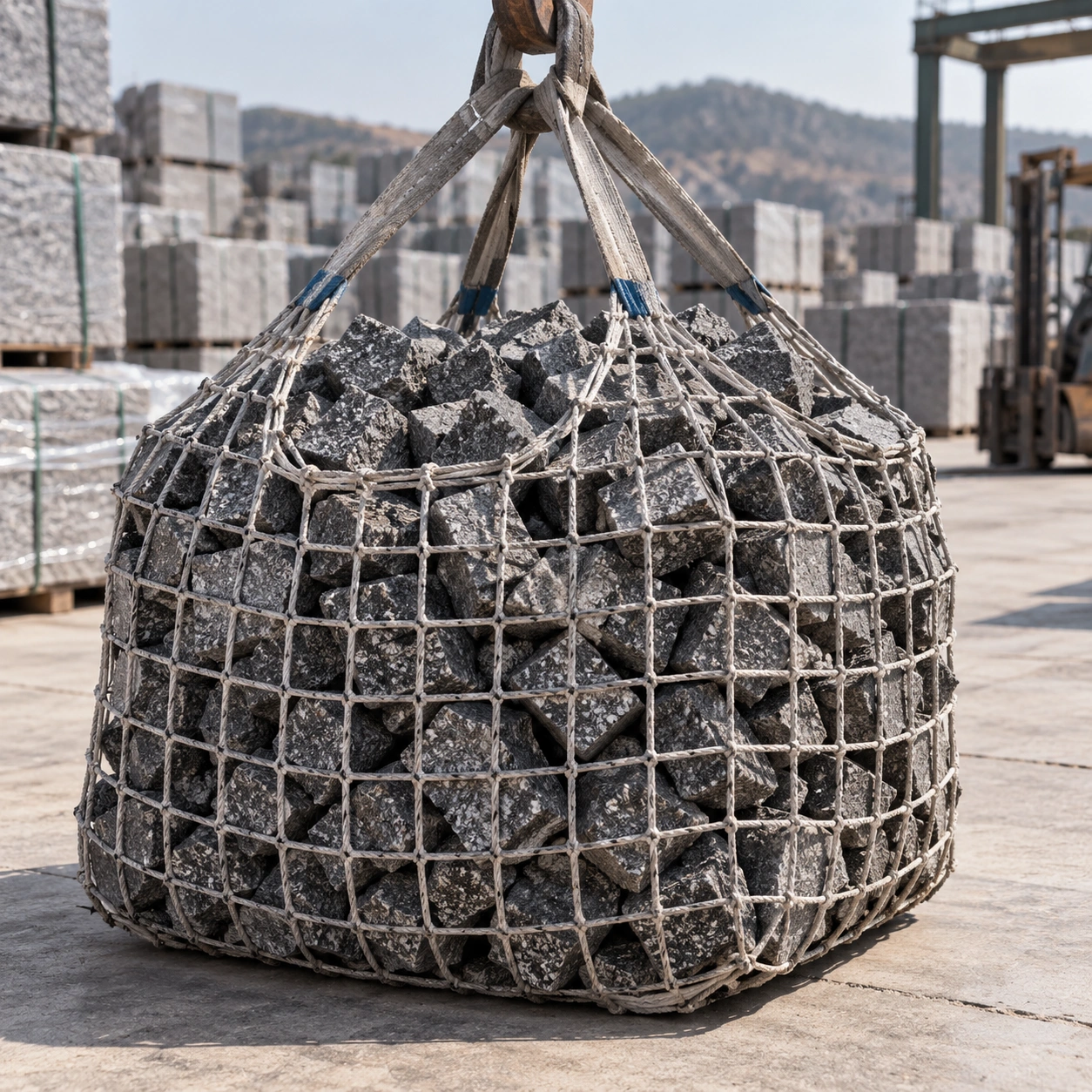 Mesh net
Used forCobbles, setts
Held in nets or on mesh so a whole unit lifts straight off the truck
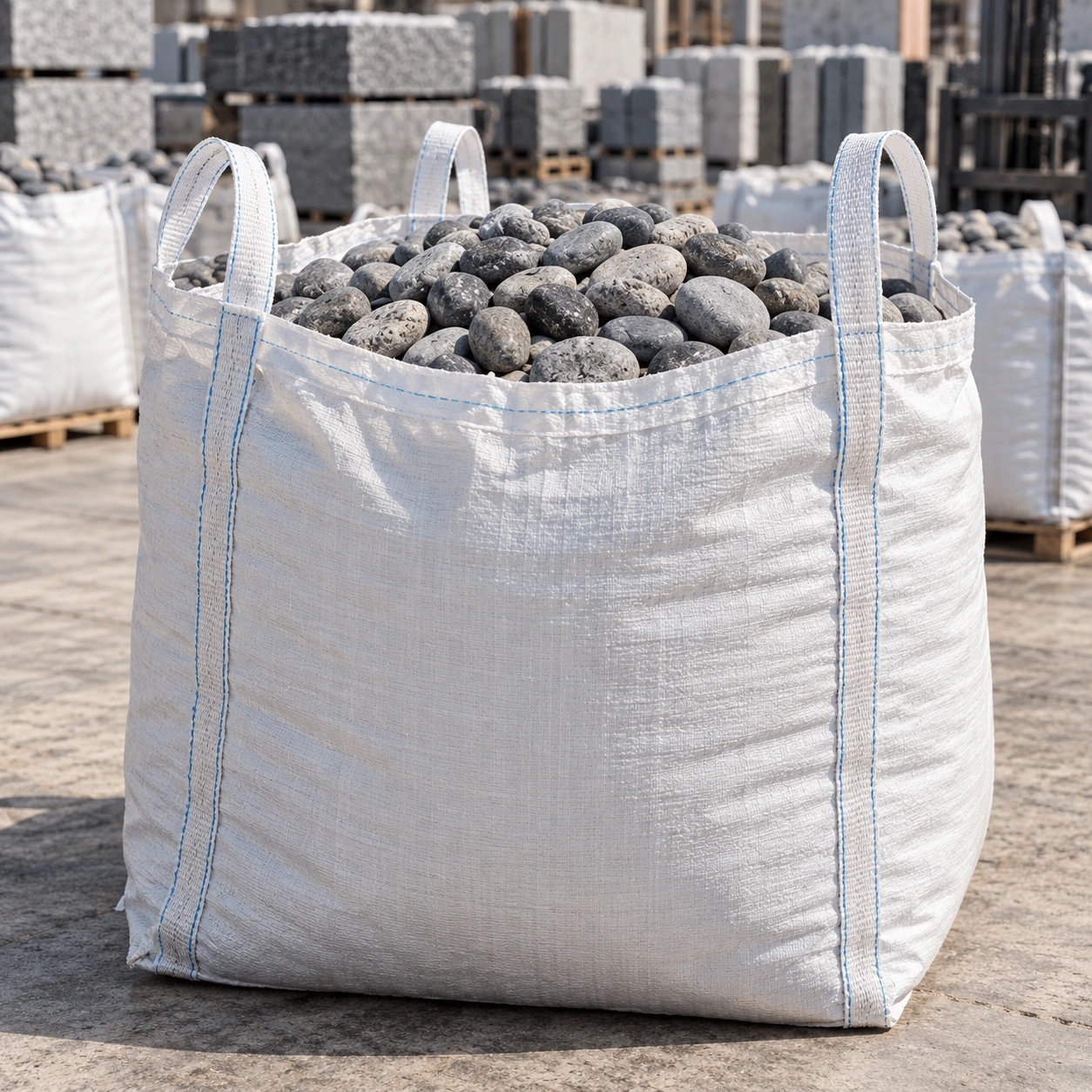 Jumbo bag
Used forPebbles, aggregate
Graded and washed, filled by weight, lifted on the loops
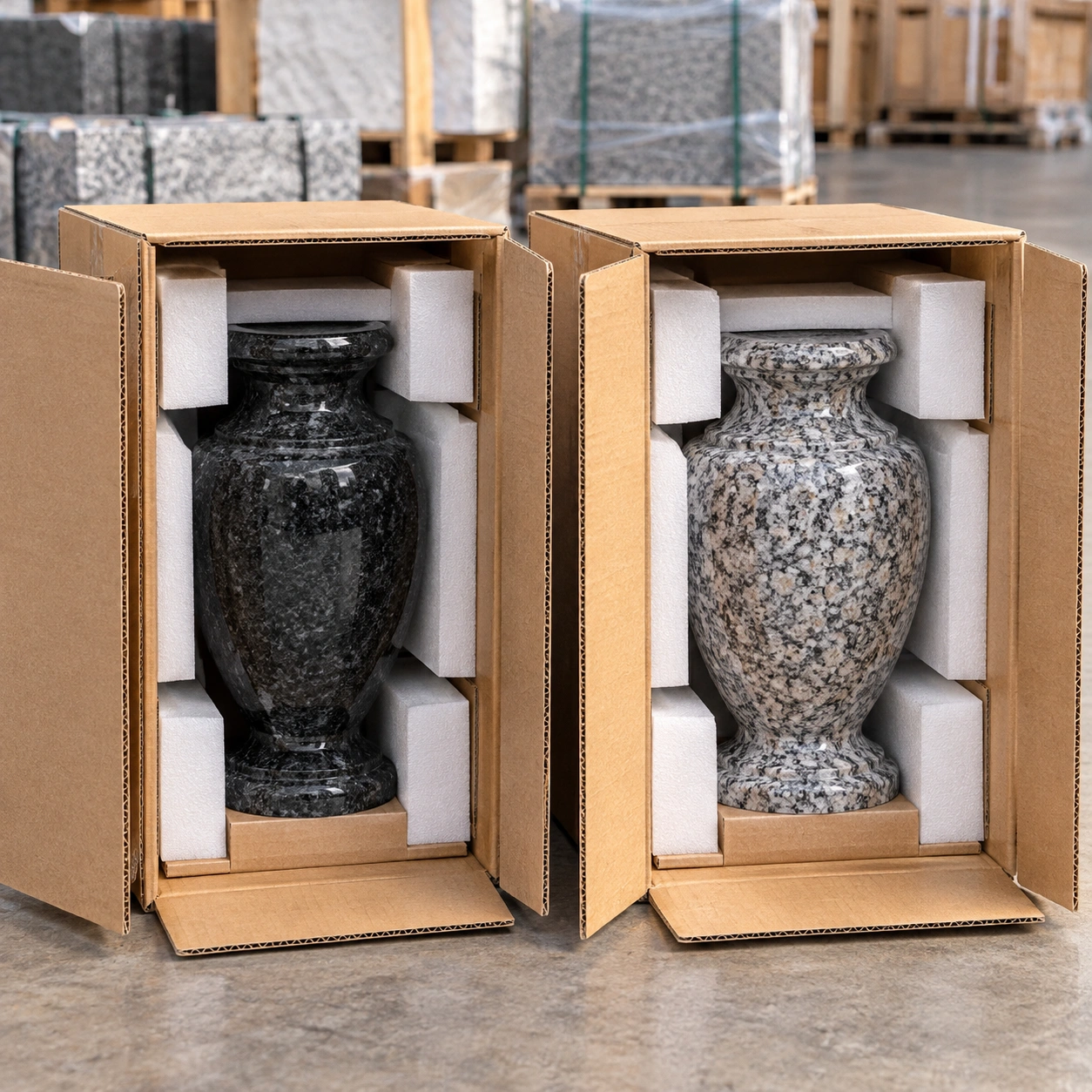 Carton
Used forVases, urns, small items
Individually boxed with rims and arrises protected, palletised inside
What goes on
inside the crate.
The crate is the easy part. What sits between the pieces, and how the load is stopped from shifting, is what decides whether it arrives clean.
Carved edges, arms and wings are boxed separately inside the crate. Nearly all transit damage starts at an arris, not on a face.
Eight steps
from yard to sealed door.
Photographs are taken of each crate and of the container as it is stuffed and sealed, and they go out with the documents.
- 01Packing listDrawn up from the order
- 02Crate buildSized around the pieces
- 03BoardingFaces and arrises protected
- 04WeighingEach crate individually
- 05MarkingNumbers, weights, lift points
- 06StuffingLoaded in build order
- 07PhotographsCrates and sealed container
- 08DocumentsInvoice, list, B/L, origin
Tell us how it is handled
after the port.


