
Six formats,
six thicknesses.
Stone is sold differently at every stage of its own production — by the block, by the slab, by the square metre or by the piece. What you buy decides how it is quoted, packed and weighed.
Six ways to
buy the same stone.
Workshops with their own saws take blocks or slabs. Dealers take finished units. The same block run can be split across both in one container.
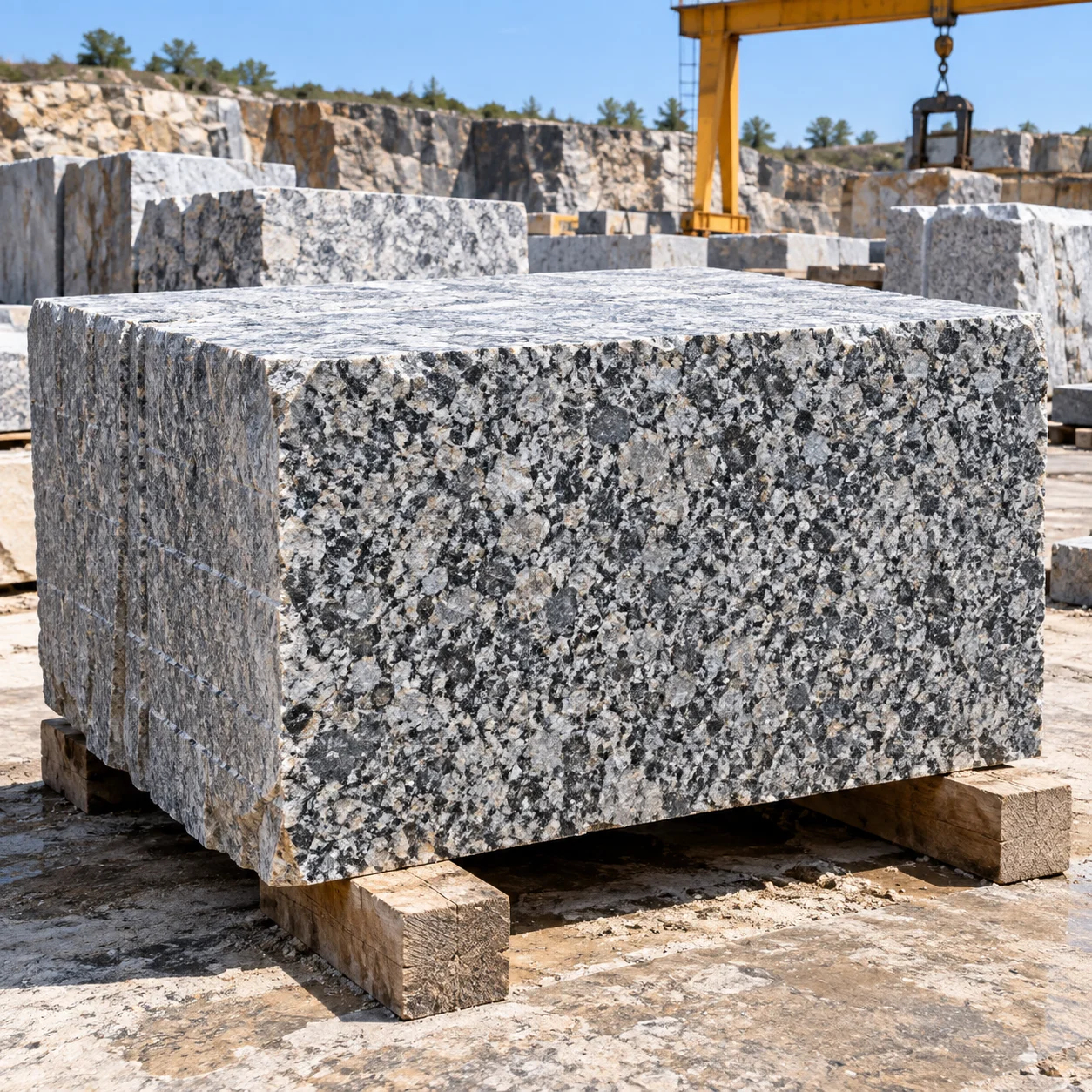 Quarry block
Sold byFull block
Selected at the face, marked to your order
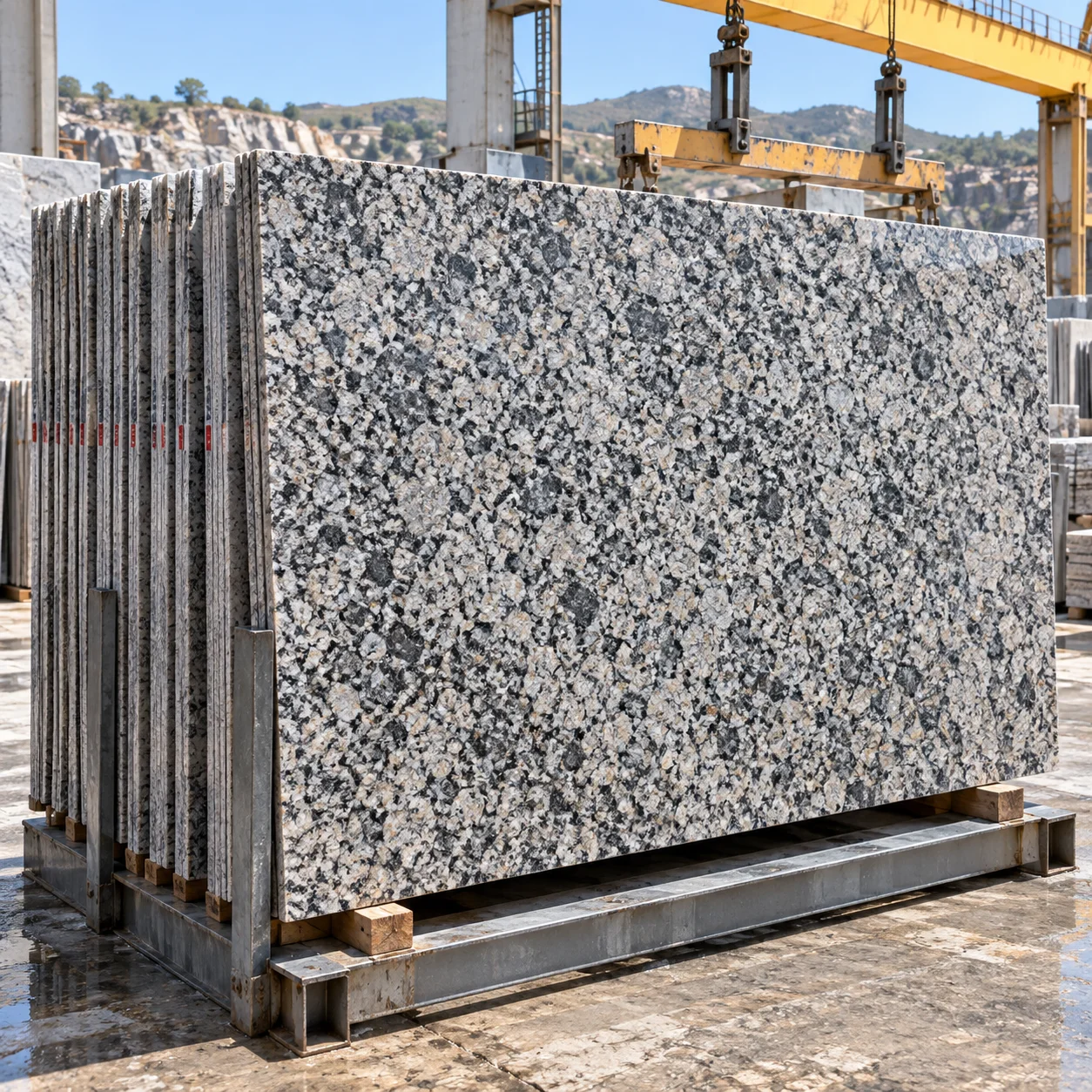 Gangsaw slab
Sold byFull block width
Sawn from the block, sequence-numbered
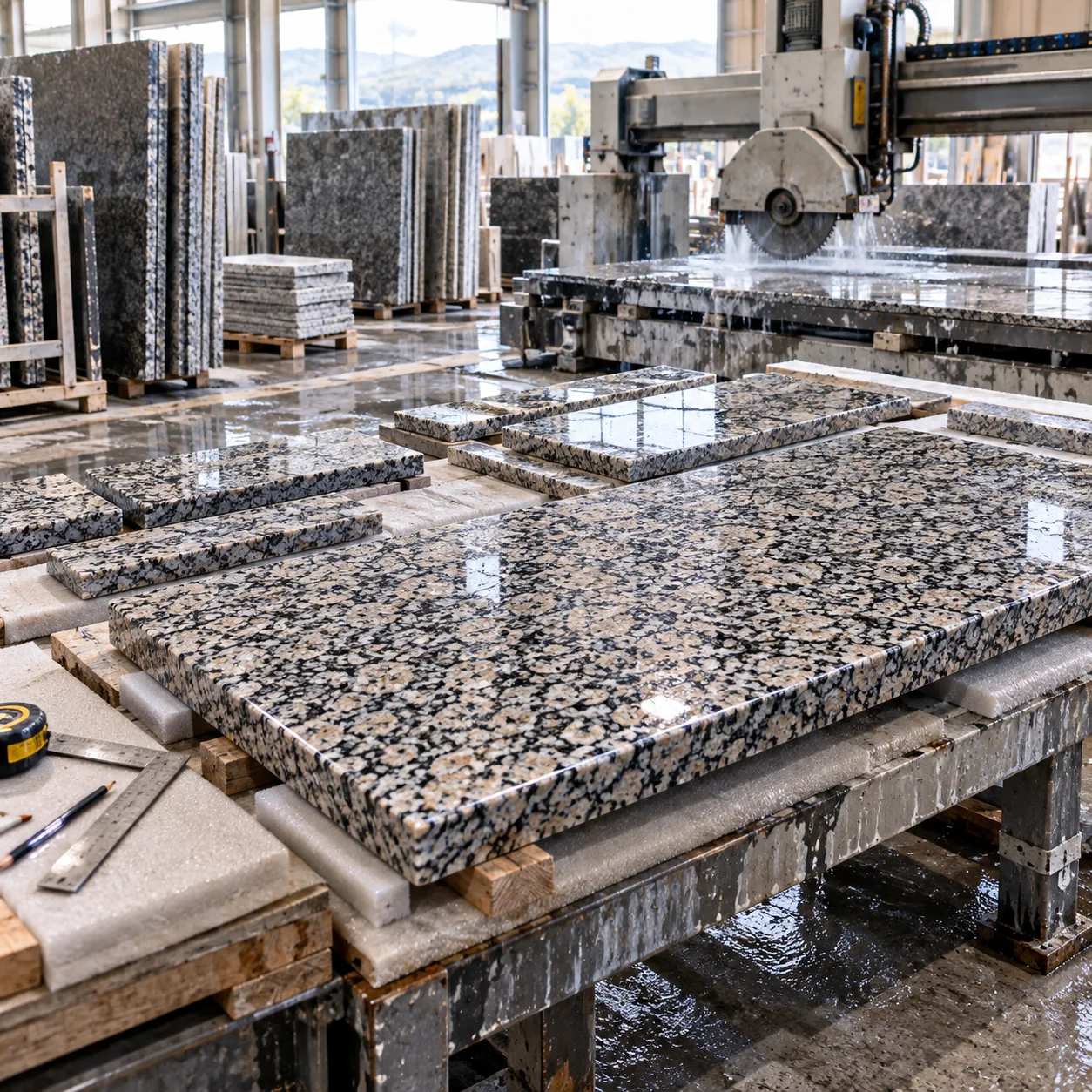 Cutter slab
Sold bySmaller sheets
Cut to working size for your own line
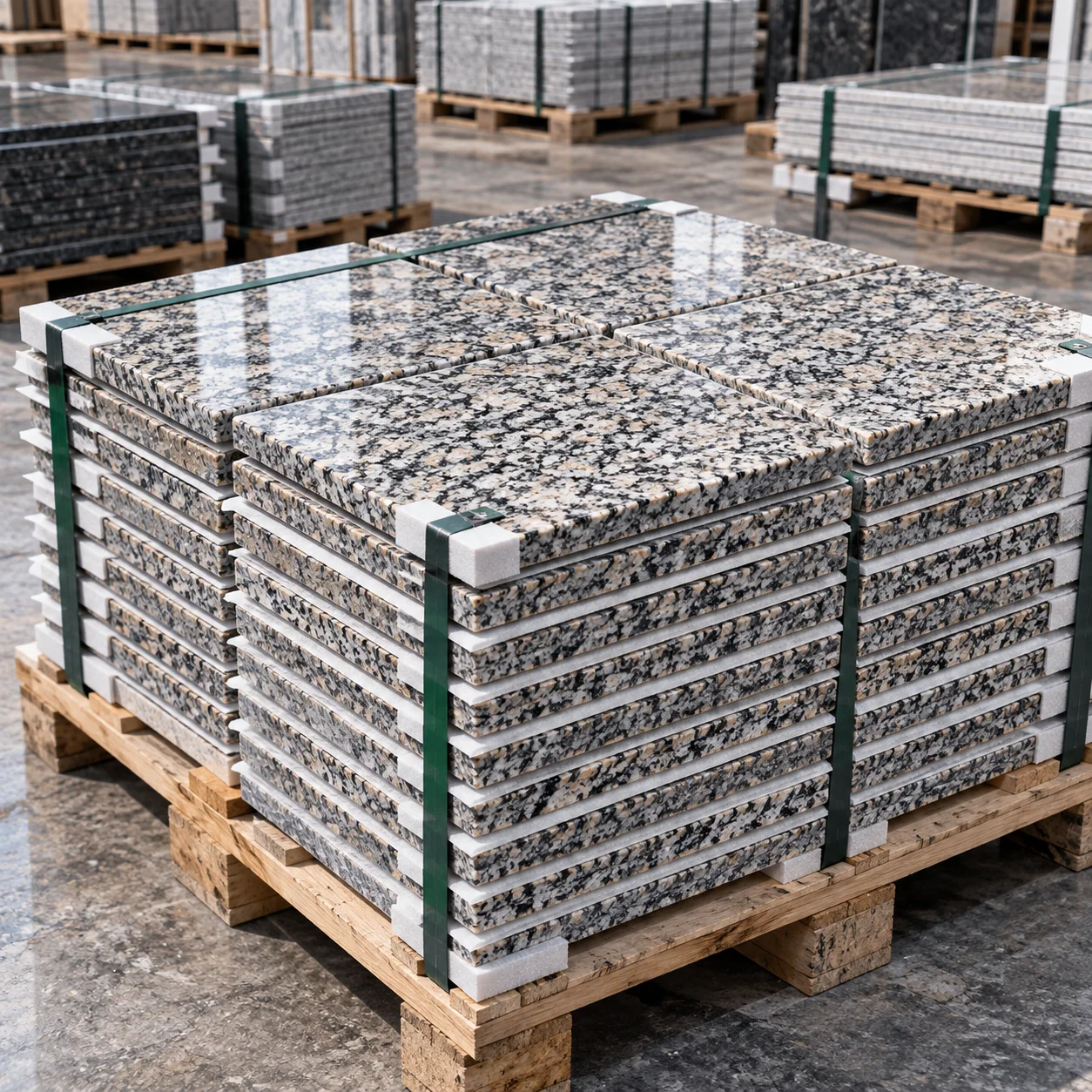 Calibrated tile
Sold byFixed sizes
Thickness held to the millimetre so tiles set flat
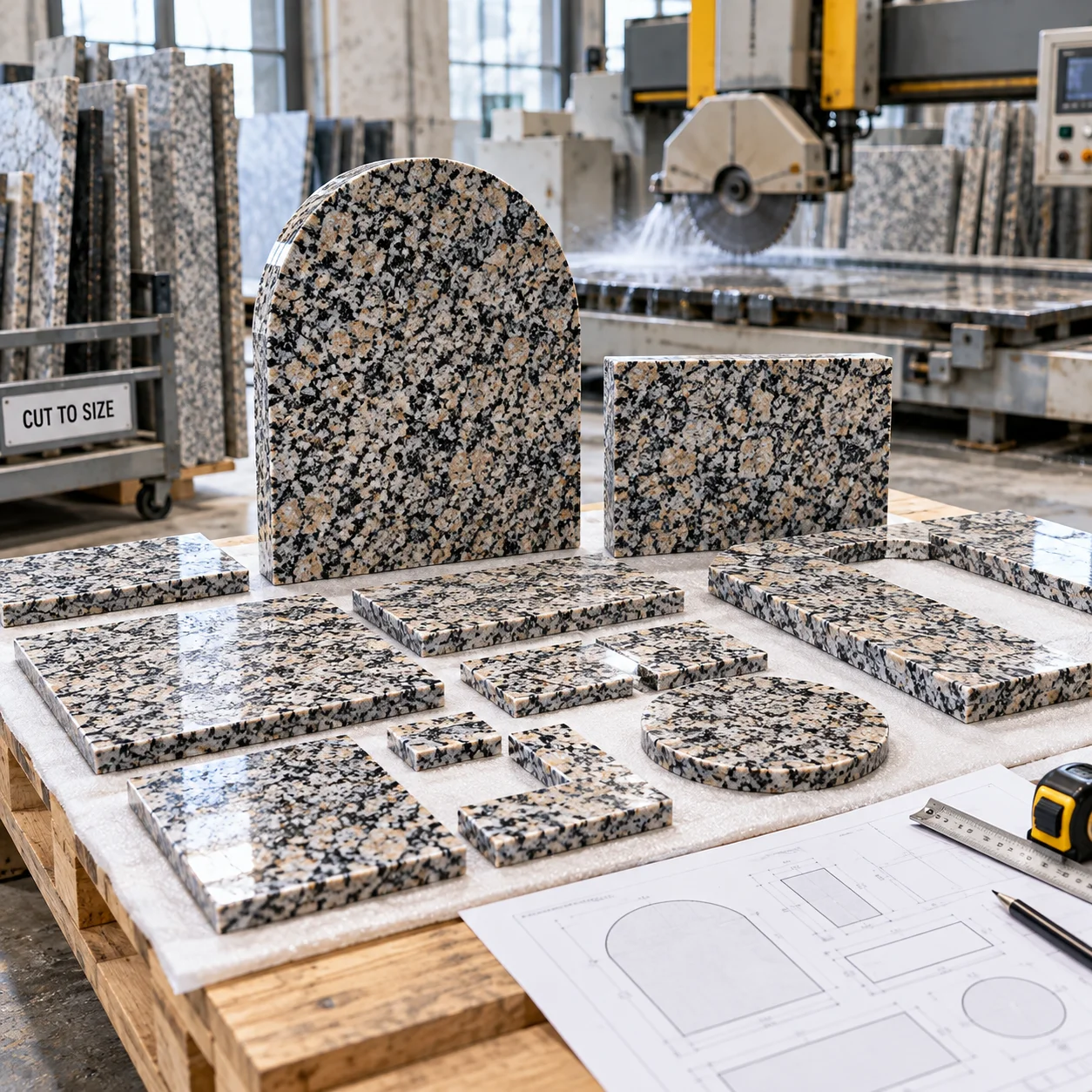 Cut-to-size
Sold byTo drawing
Every piece to its own dimensions, piece-marked
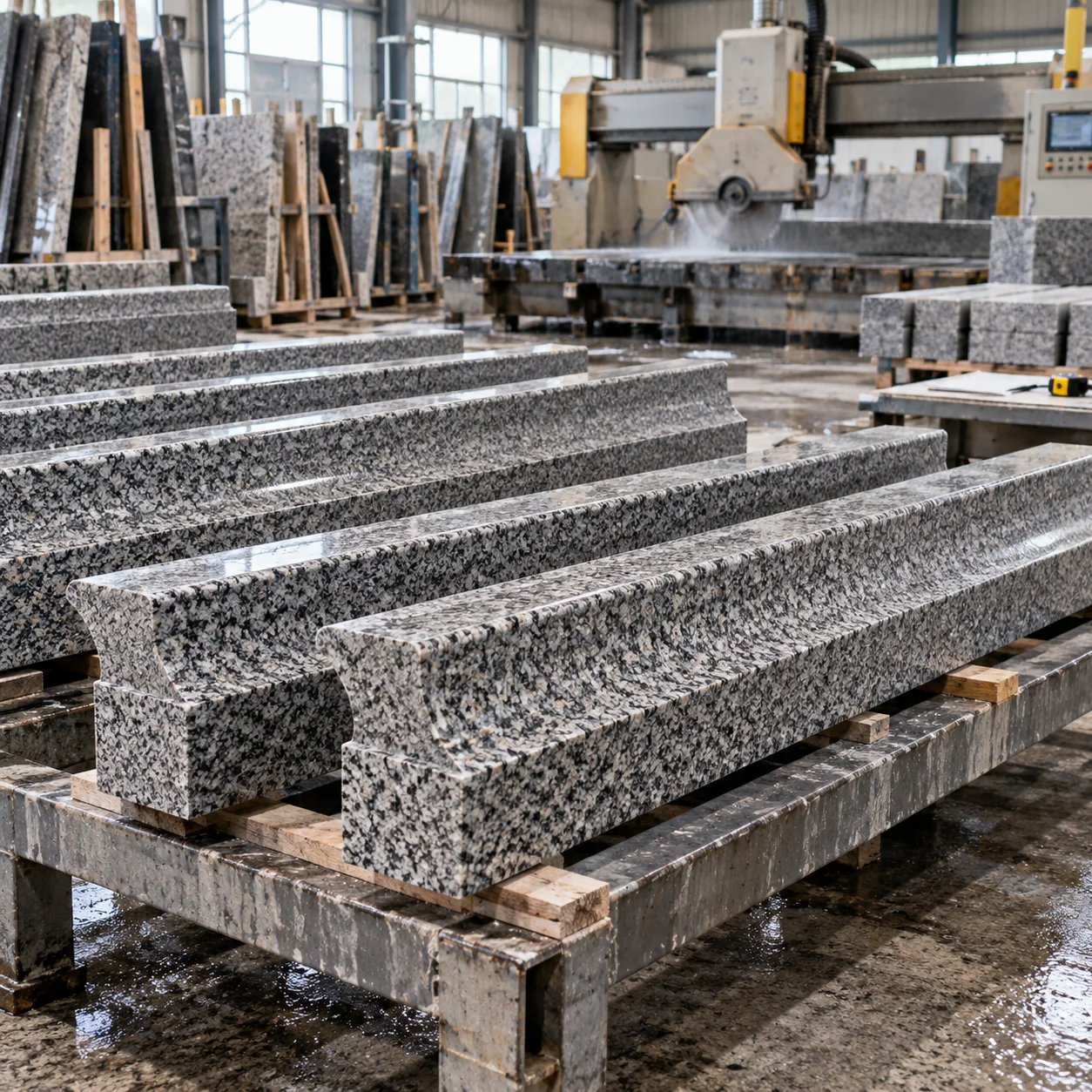 Kerb & section
Sold byBy running metre
Long sections cut to a profile and length
Six thicknesses,
and where each goes.
Tiles are calibrated to the millimetre so they set flat. Anything heavier is cut to your drawing rather than to a stock size.
Monuments and cut-to-size units are quoted in finished dimensions, not slab thickness — send the drawing and the thickness follows from it.
What fits
in a container.
Granite reaches the weight limit long before it fills the space, so a stone container is nearly always weight-limited rather than volume-limited.
A 40 ft container is rarely full when it is full. Tell us the weight limit at your port and the loading plan is built to it — and if a line is short, landscaping or slabs make up the balance on the same bill.
Send the cutting list.
We will send the loading plan.


