The edge is where
stone gets damaged.
Faces survive handling; arrises do not. Twelve profiles drawn in section, with what each is normally used on — and what it does for the piece when it is lifted, mown against or walked on.
Twelve profiles,
in section.
Square is standard and the cheapest. Everything after it is machine time, and the moulded profiles take the longest.
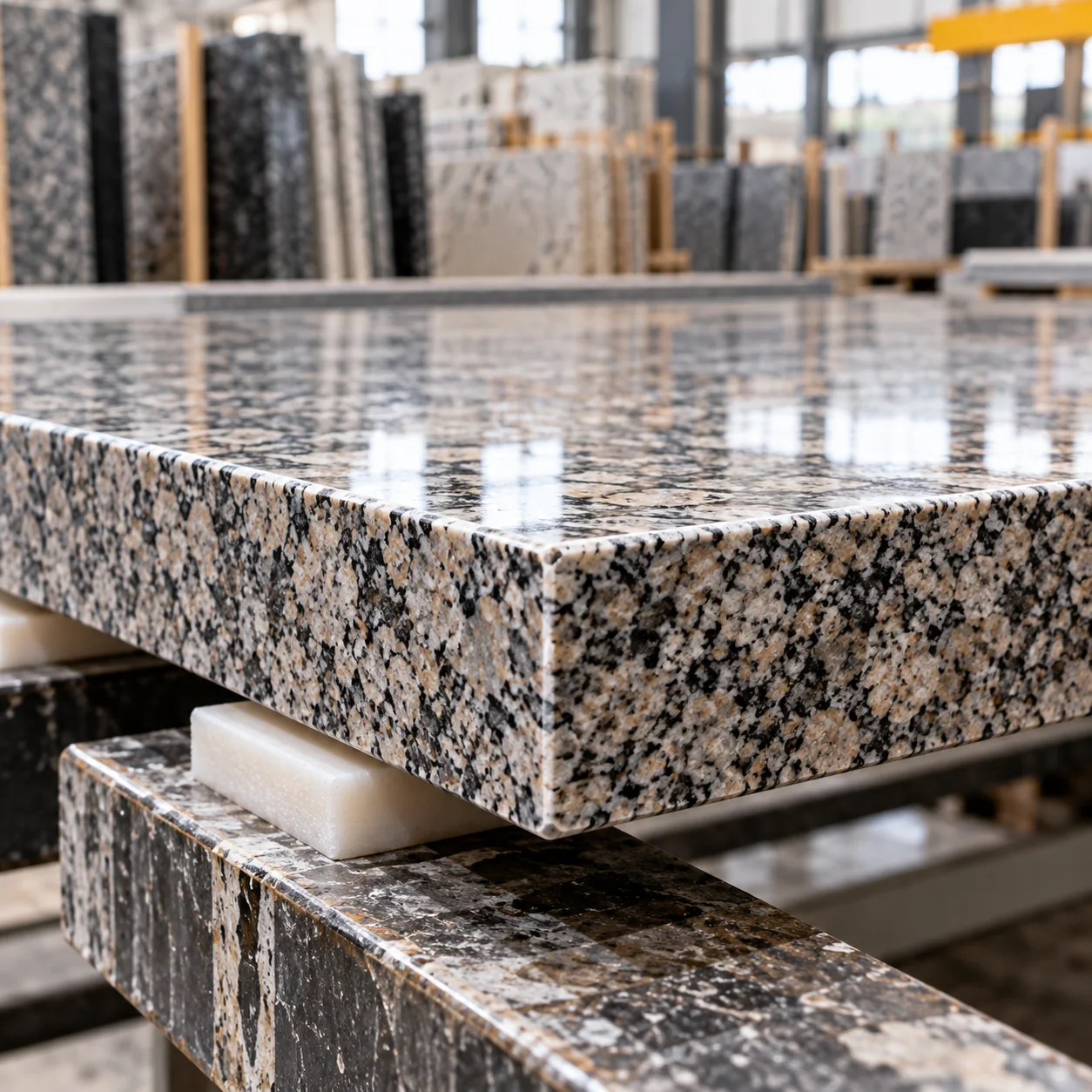 Square / arris eased
Used onSlabs, cladding
Sawn straight, sharp edge taken off
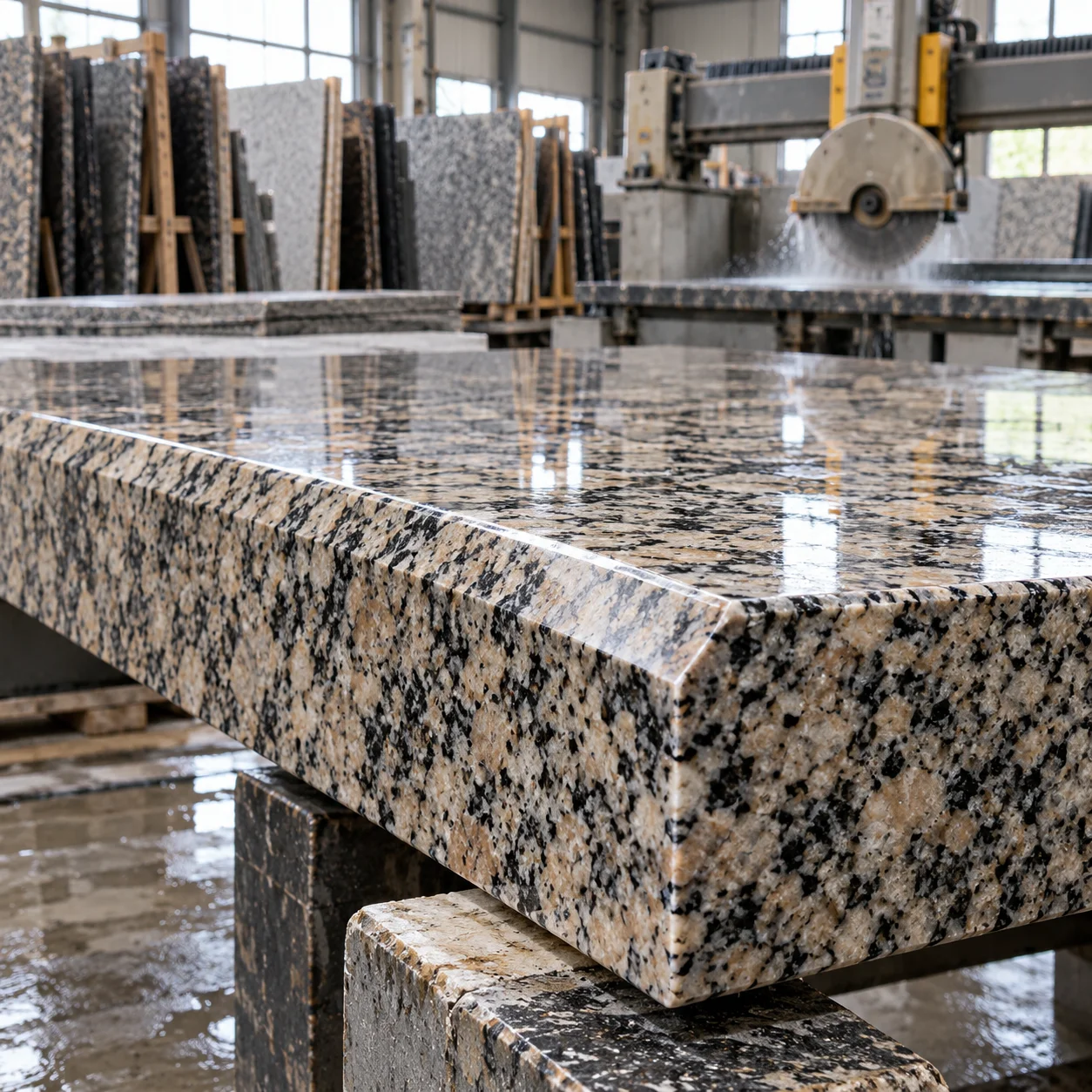 Bevelled
Used onCounters, treads
A flat cut at 45° on the top arris
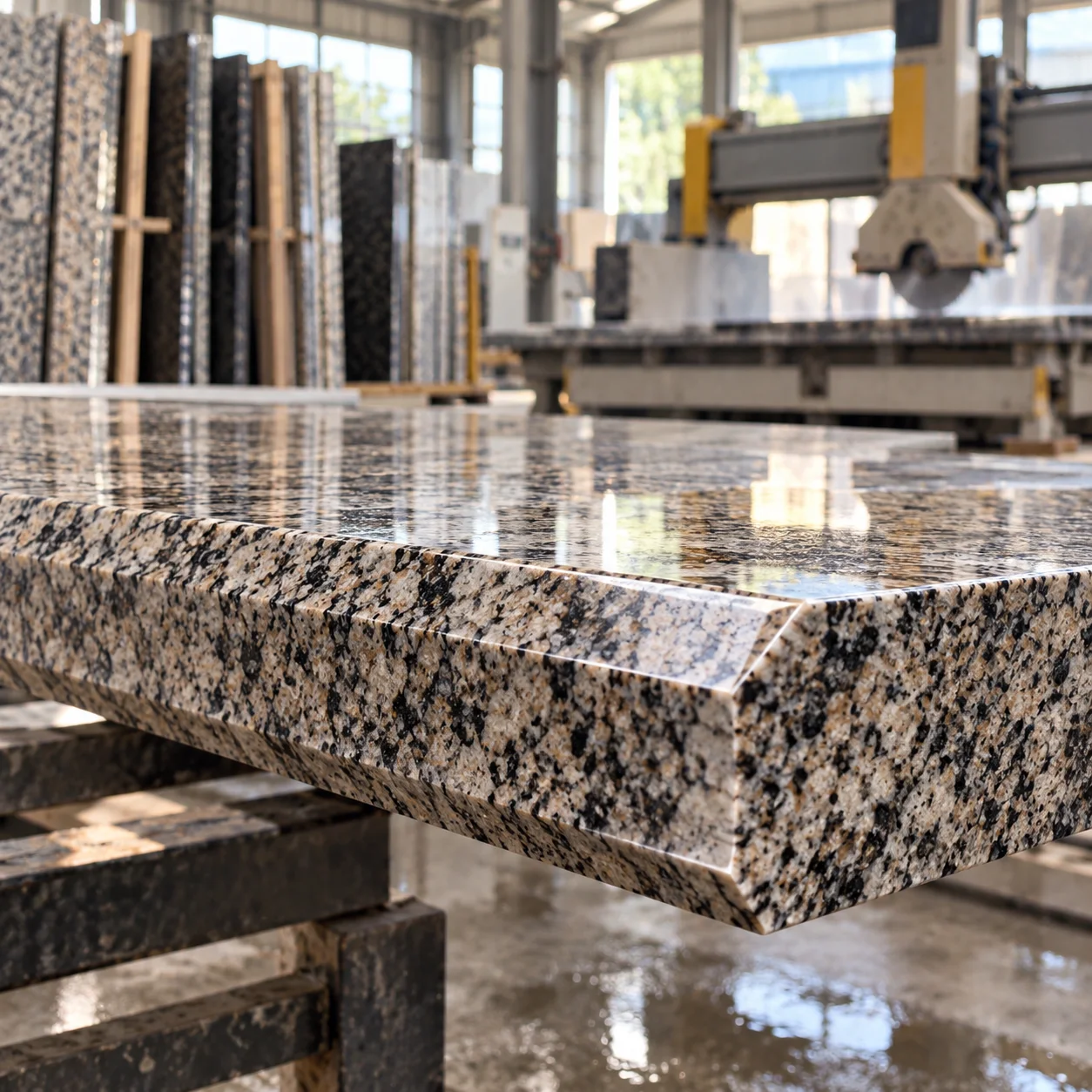 Double bevel
Used onPlates, steps
Bevels top and bottom, symmetrical
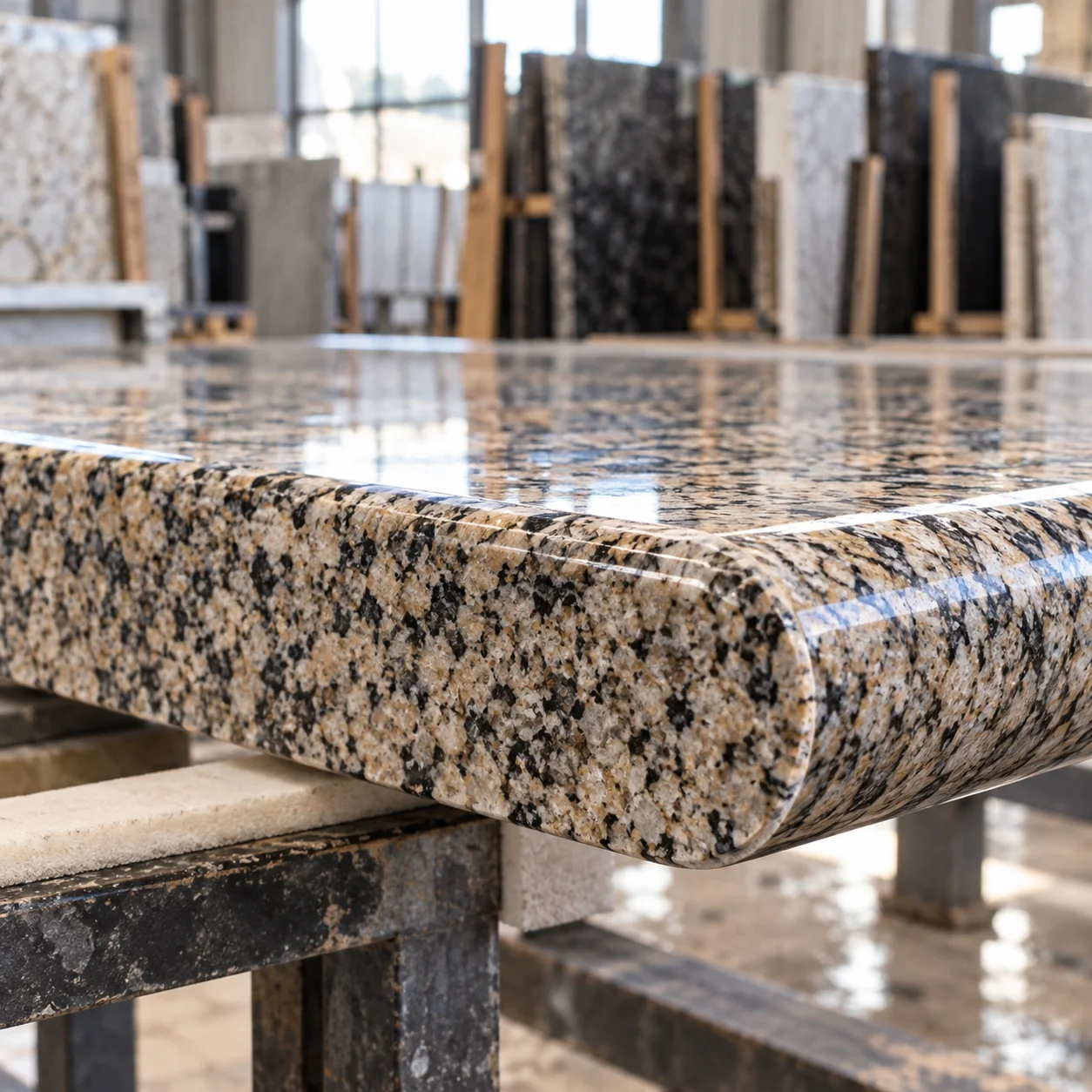 Half round
Used onKerbs, copings
Rounded over the full thickness
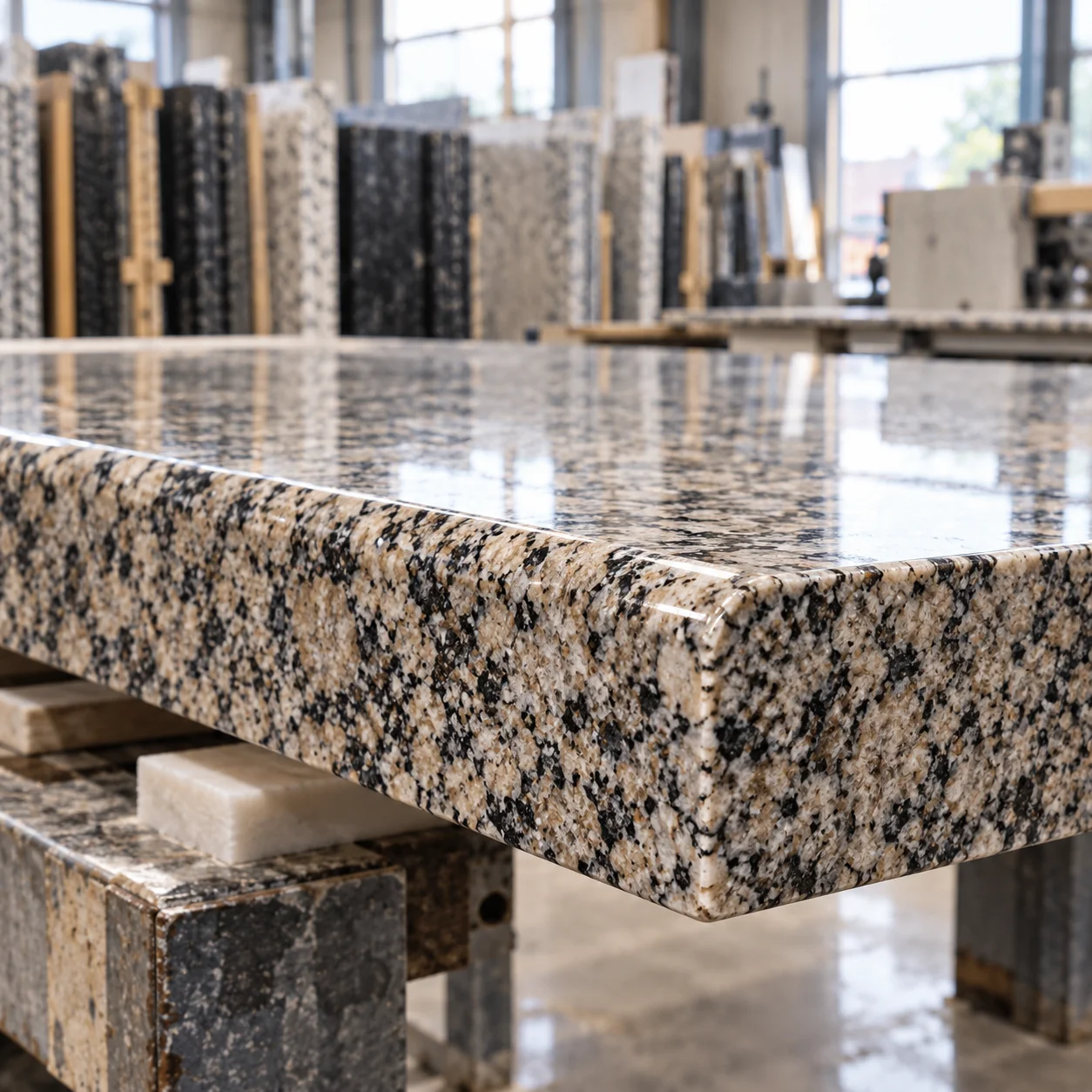 Quarter round
Used onCounters, sills
Top corner rounded, bottom square
 Pencil round
Used onFloors, wall panels
A small radius, barely there
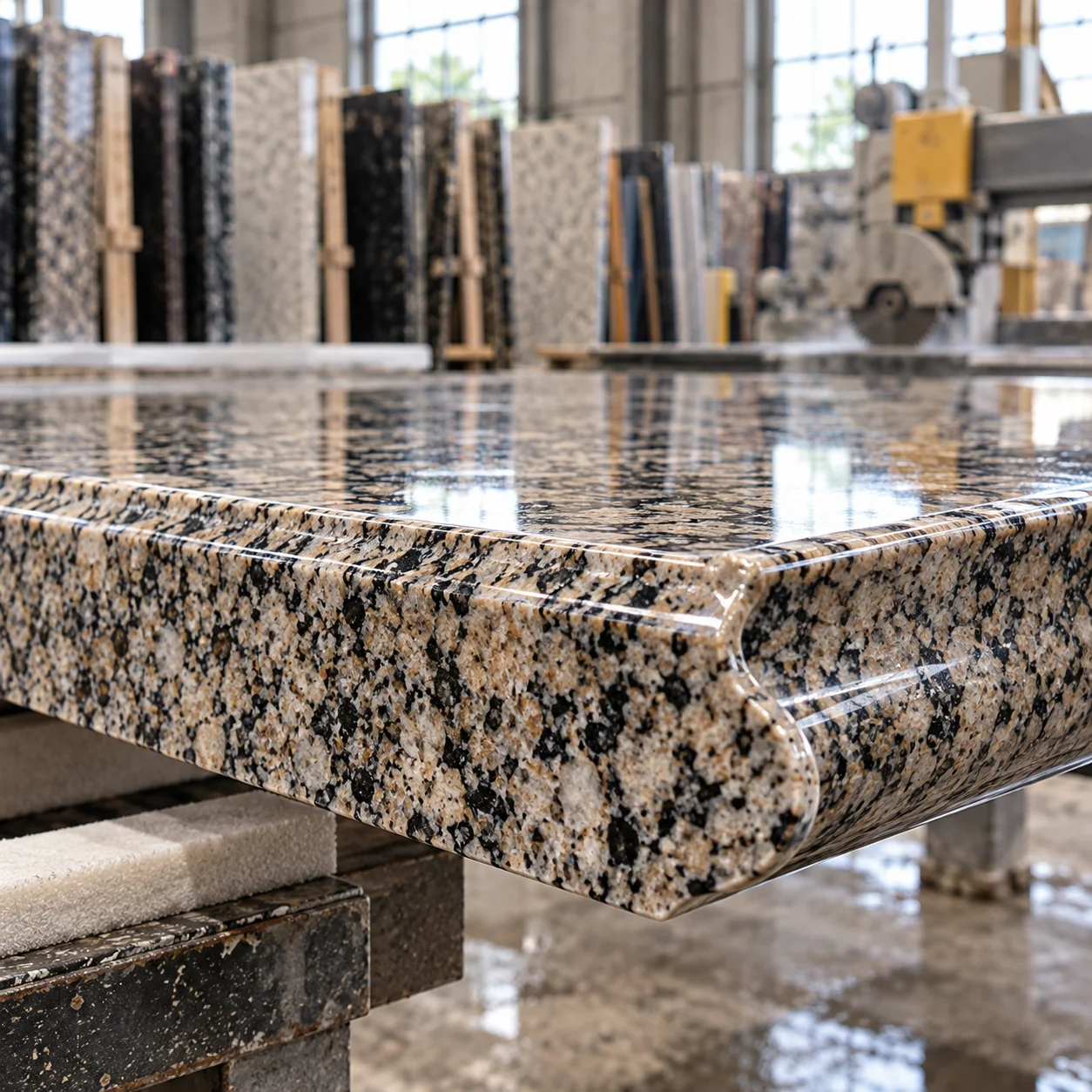 Ogee
Used onBases, kerbs, mantels
S-curve profile, the traditional moulding
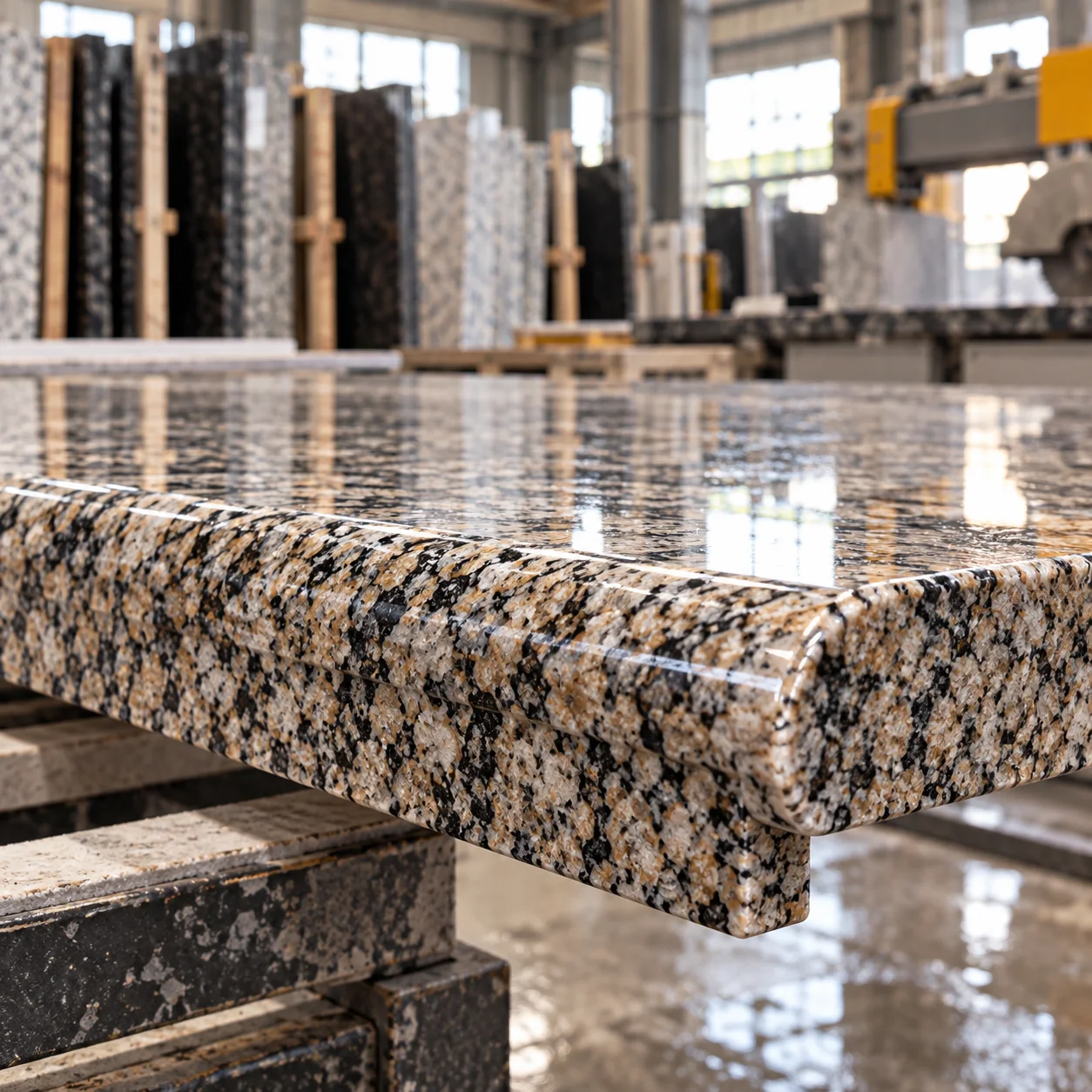 Half bullnose
Used onCounters, vanities
Rounded top half, straight below
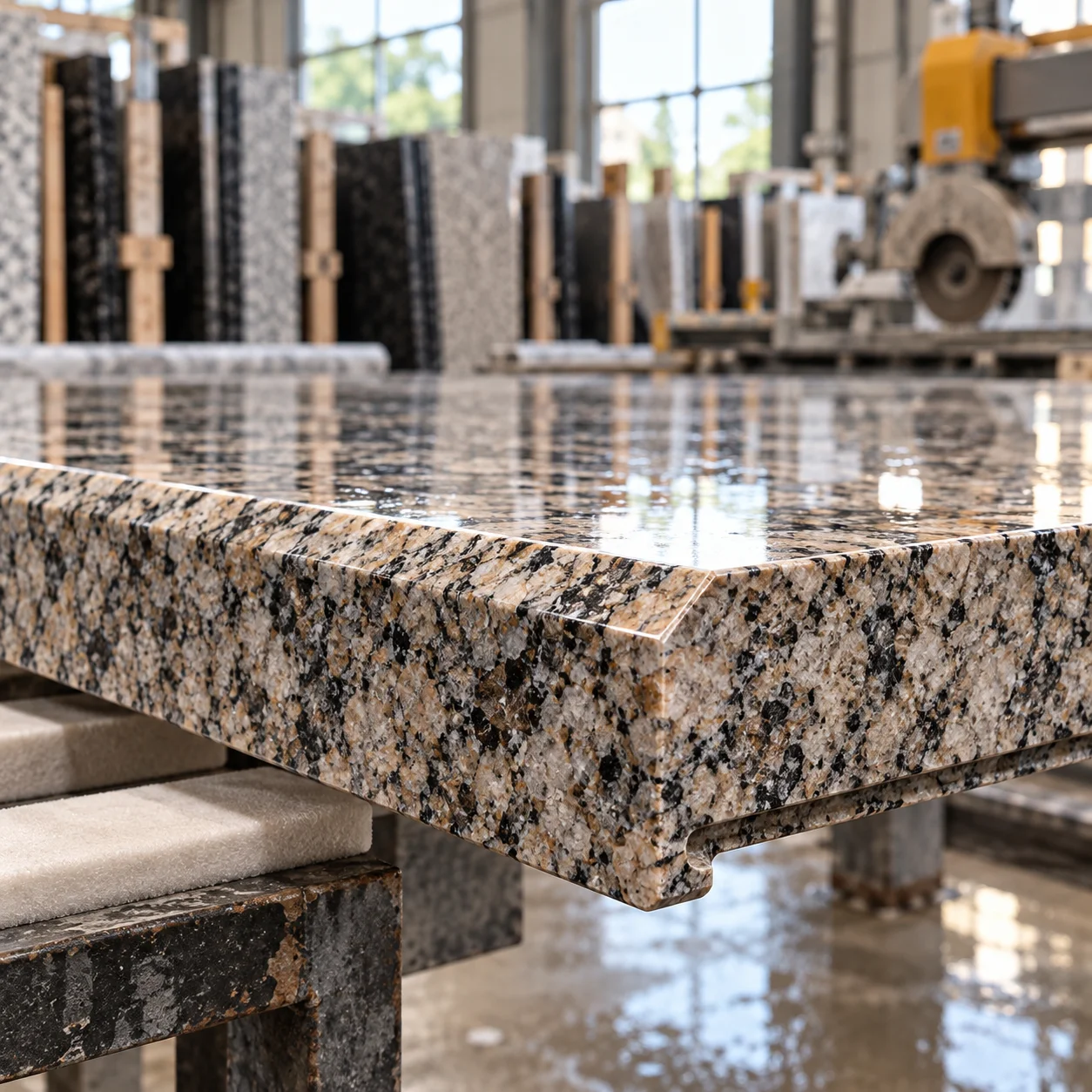 Chamfered & grooved
Used onCopings, sills
Bevel with a drip groove behind
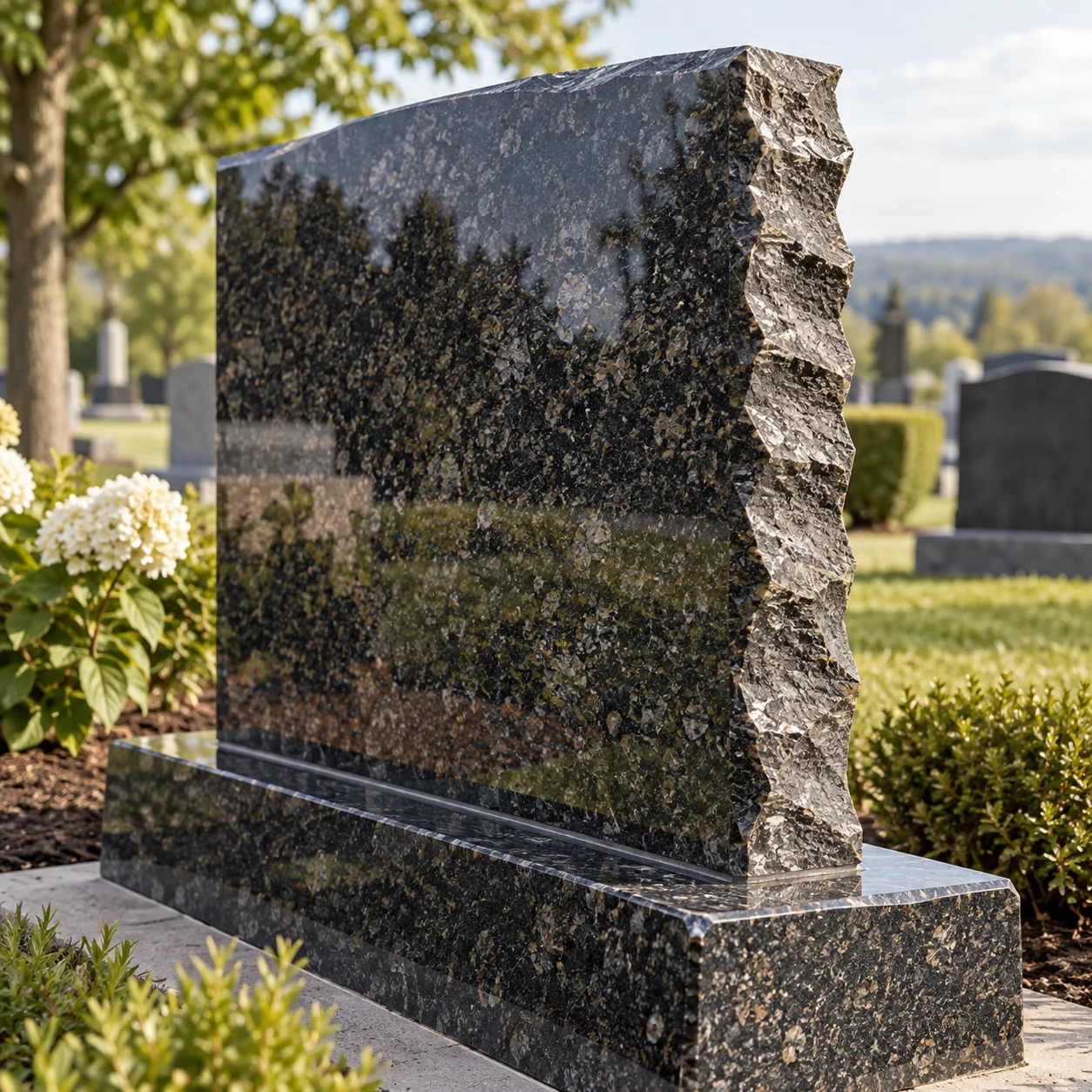 Rock pitched
Used onMonument sides
Hand-chiselled broken face
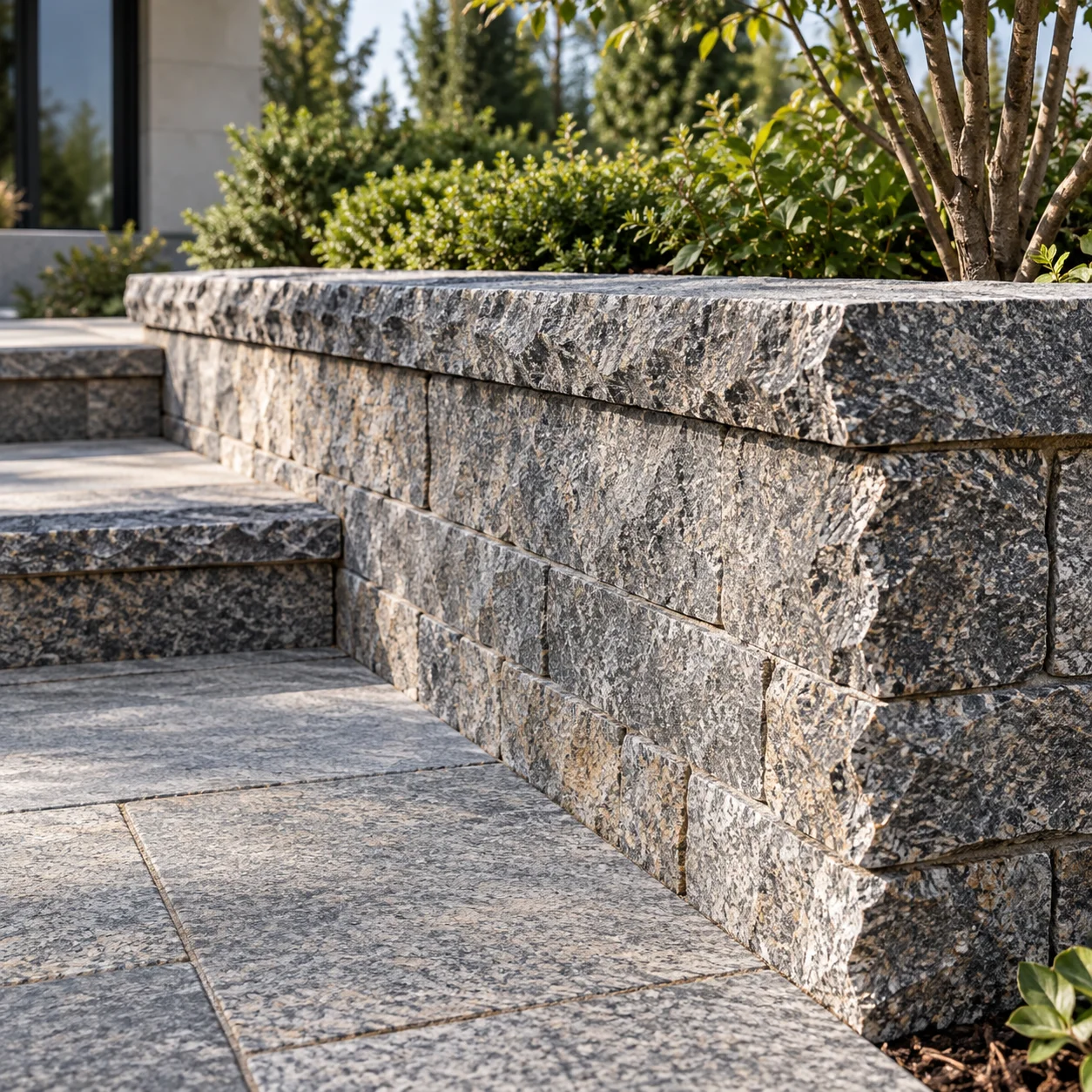 Split / riven
Used onPaving, walling
The stone's own split line
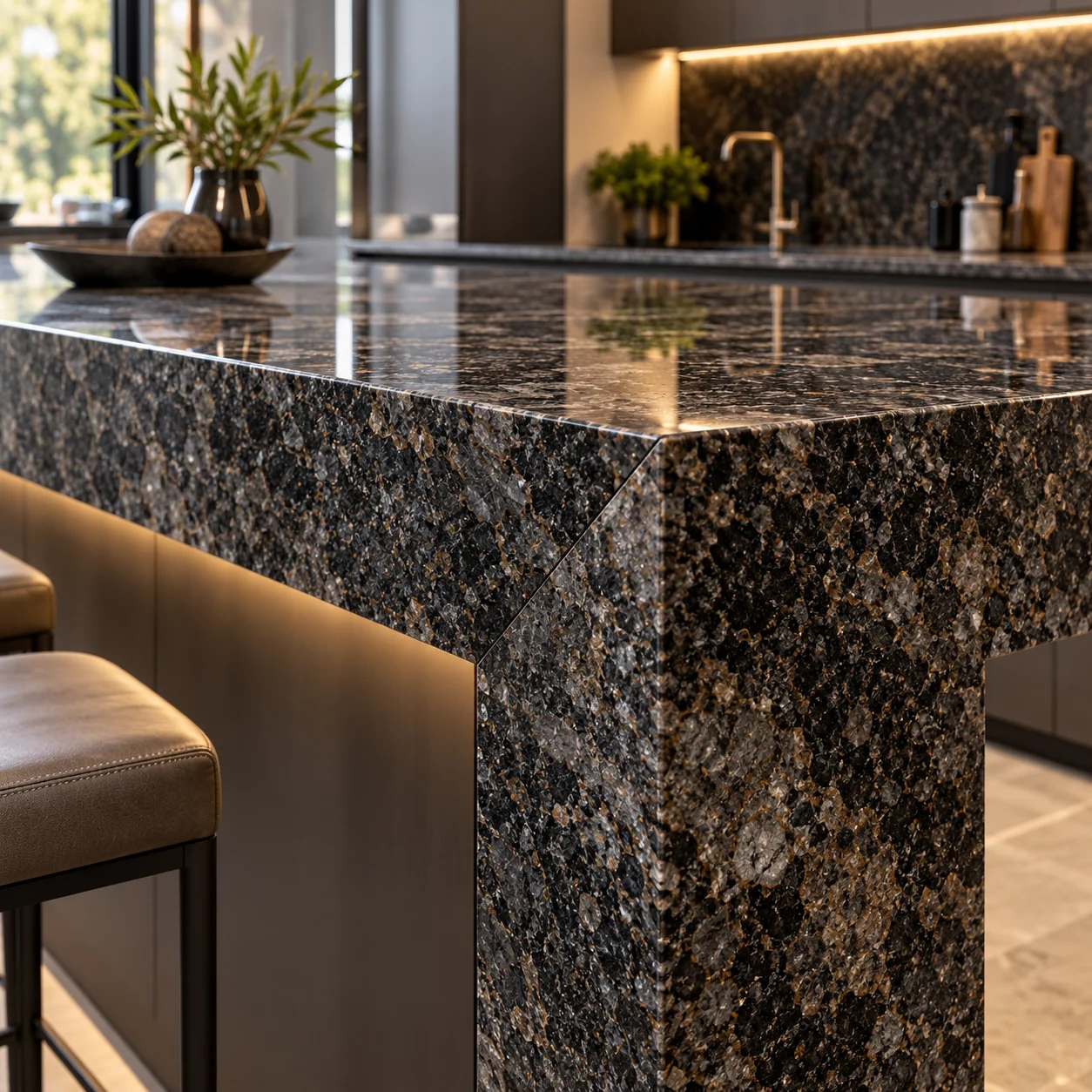 Mitred
Used onThick-look counters
Two pieces at 45° to hide the joint
A sharp arris photographs beautifully and chips on the first bad lift. Ease it unless the design genuinely needs that line — a pencil round costs almost nothing and saves the piece.
Making a slab
look thicker than it is.
A heavy edge does not have to mean a heavy slab. Three ways to get the look, and what each costs in freight and in risk.
Mitred and laminated edges ship lighter and use less stone, but they put a glued joint on the most exposed line of the piece. Outdoors, in freeze-thaw, we recommend solid.
Mark the edges
on the drawing.


