
Kerb sets cut
to close on site.
Full and half surrounds, corner posts, covers and chipping trays — mitred, dry-fitted at the works and numbered so your setter is not cutting stone in a cemetery.
Twelve surrounds,
cut to your plot sizes.
Send the grave size and the cemetery's rule sheet — kerb lengths follow from those two, not from a catalogue.
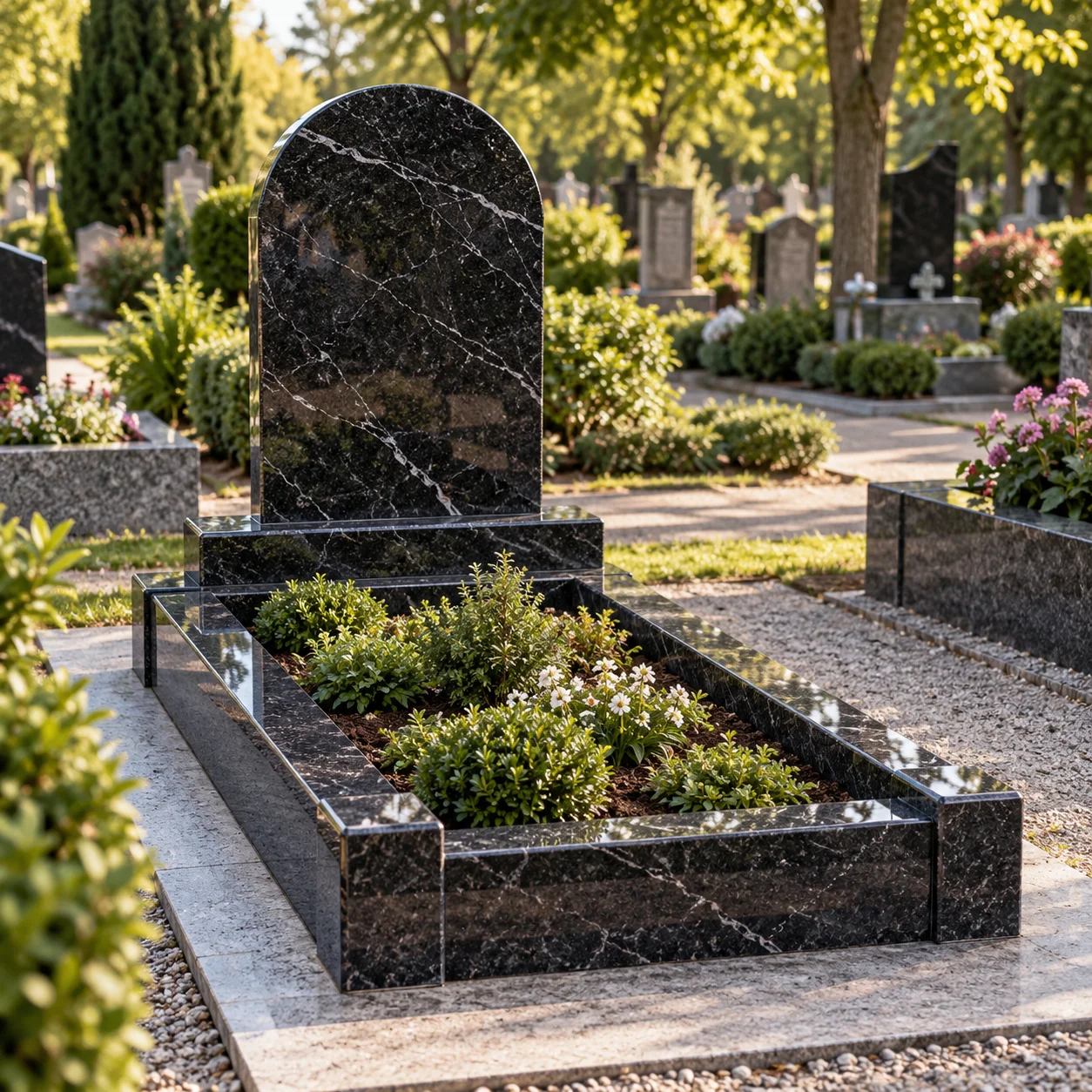 Full kerb setHead, sides and foot kerbs with a headstone
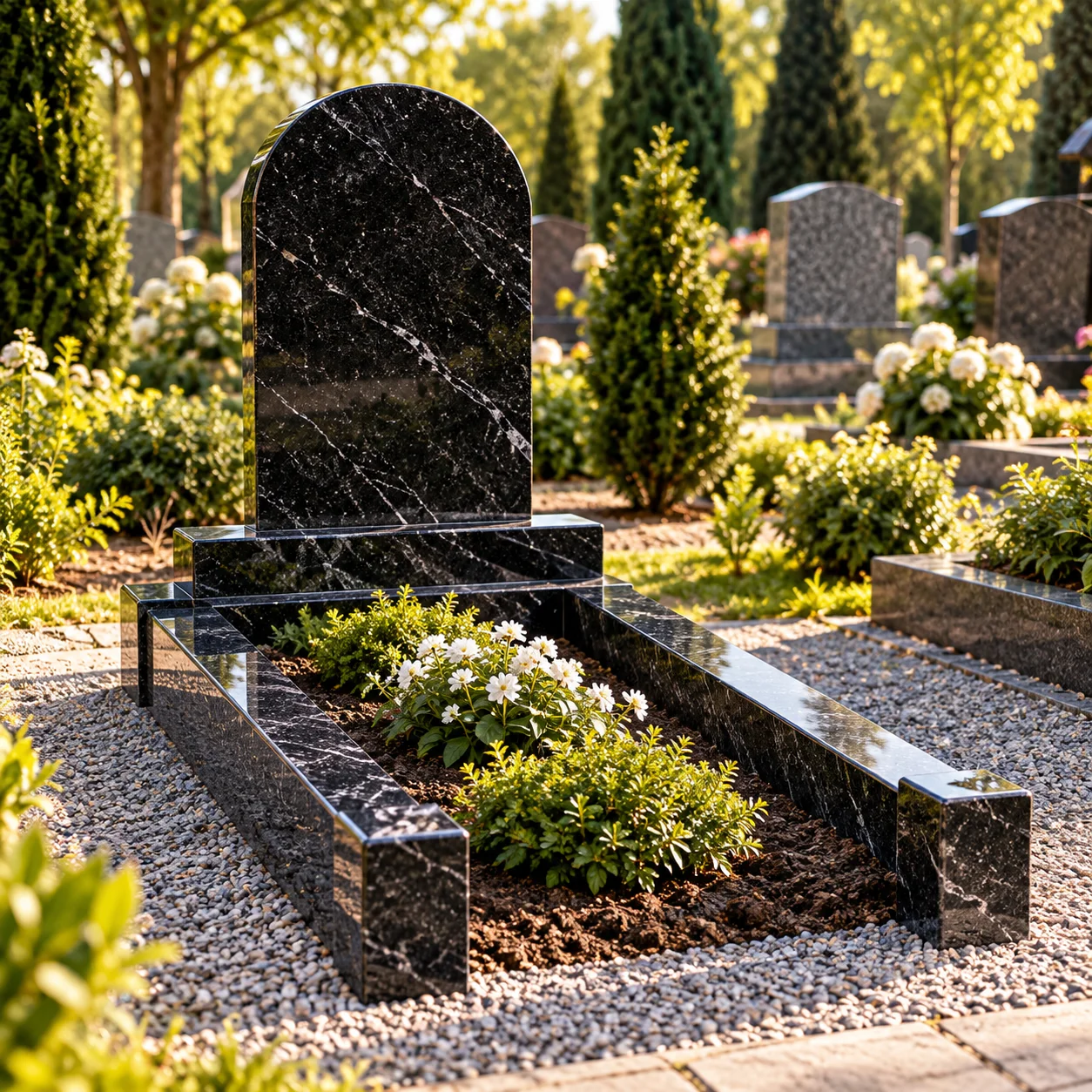 Half kerb setHead and side kerbs only, open at the foot
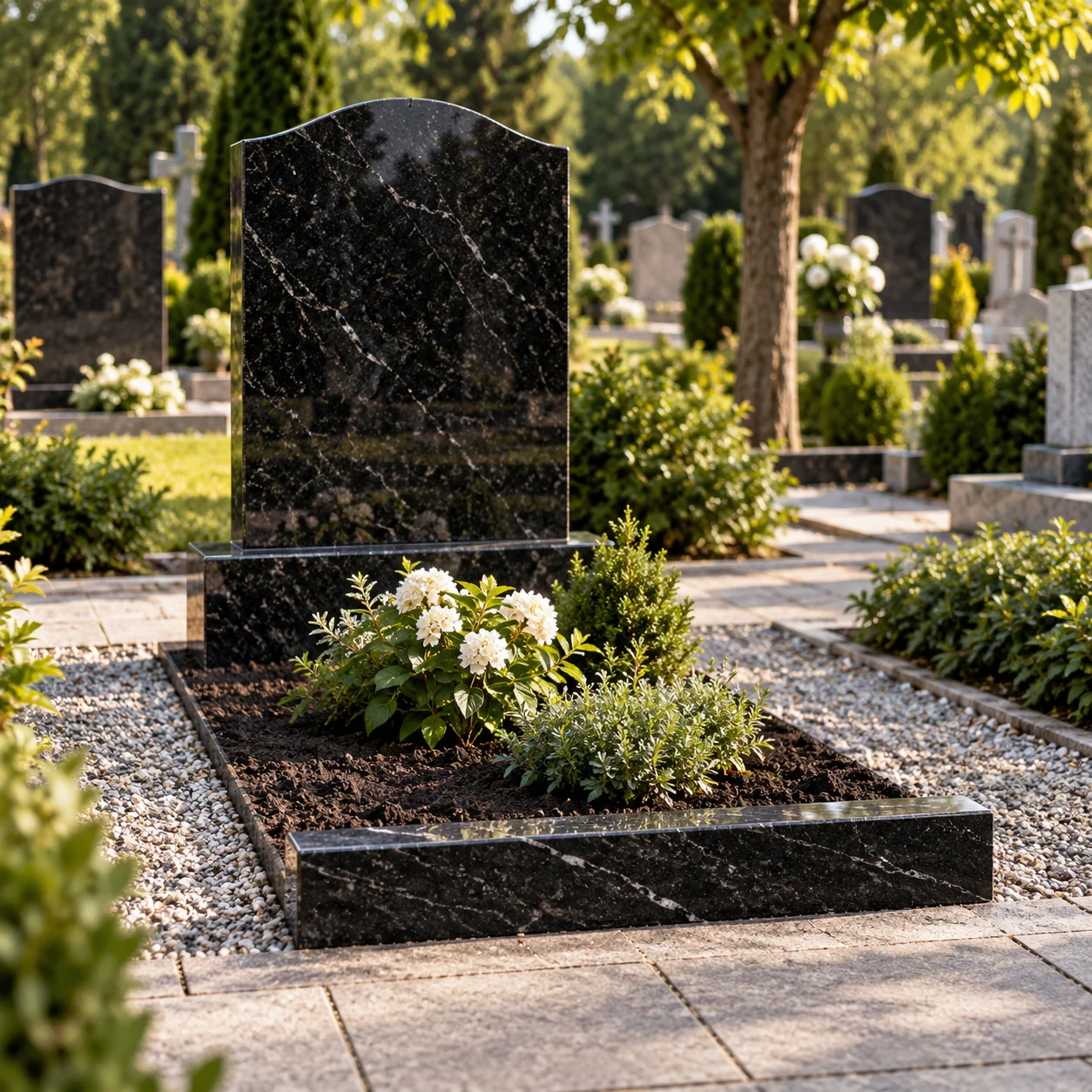 Foot kerbA single low kerb at the foot of the grave
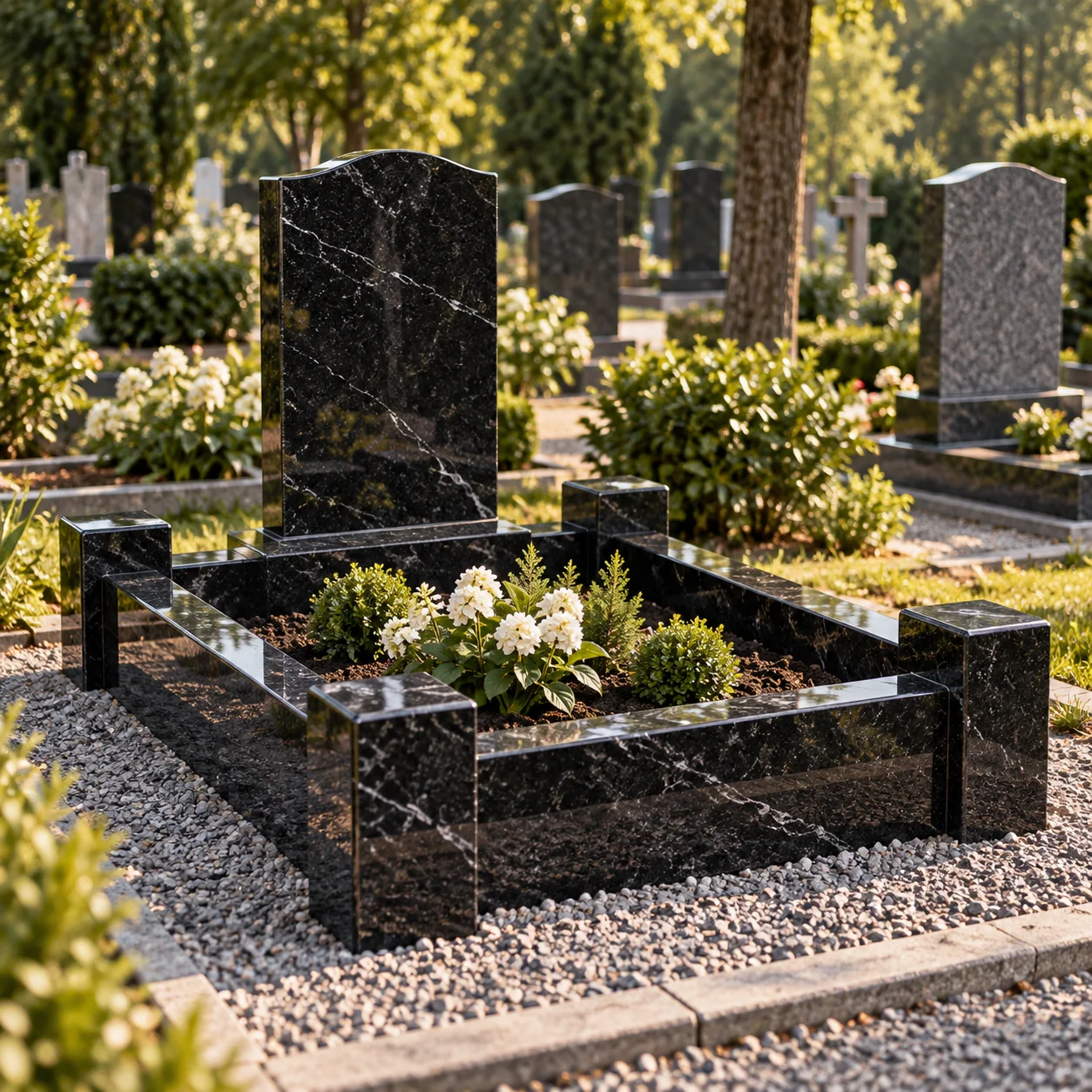 Corner postsPosts at the corners with kerb runs between
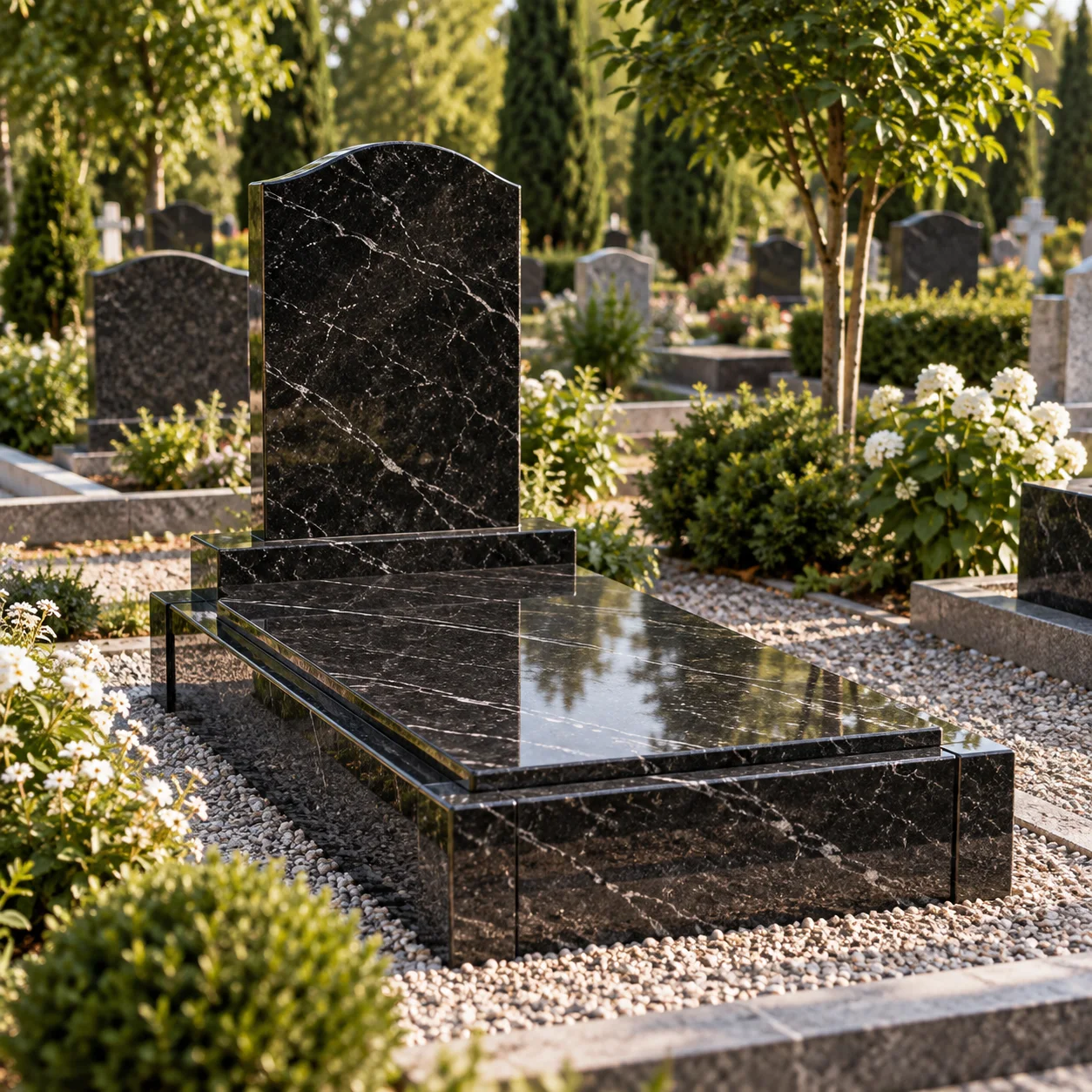 Kerb with coverKerbs closed with a full cover slab
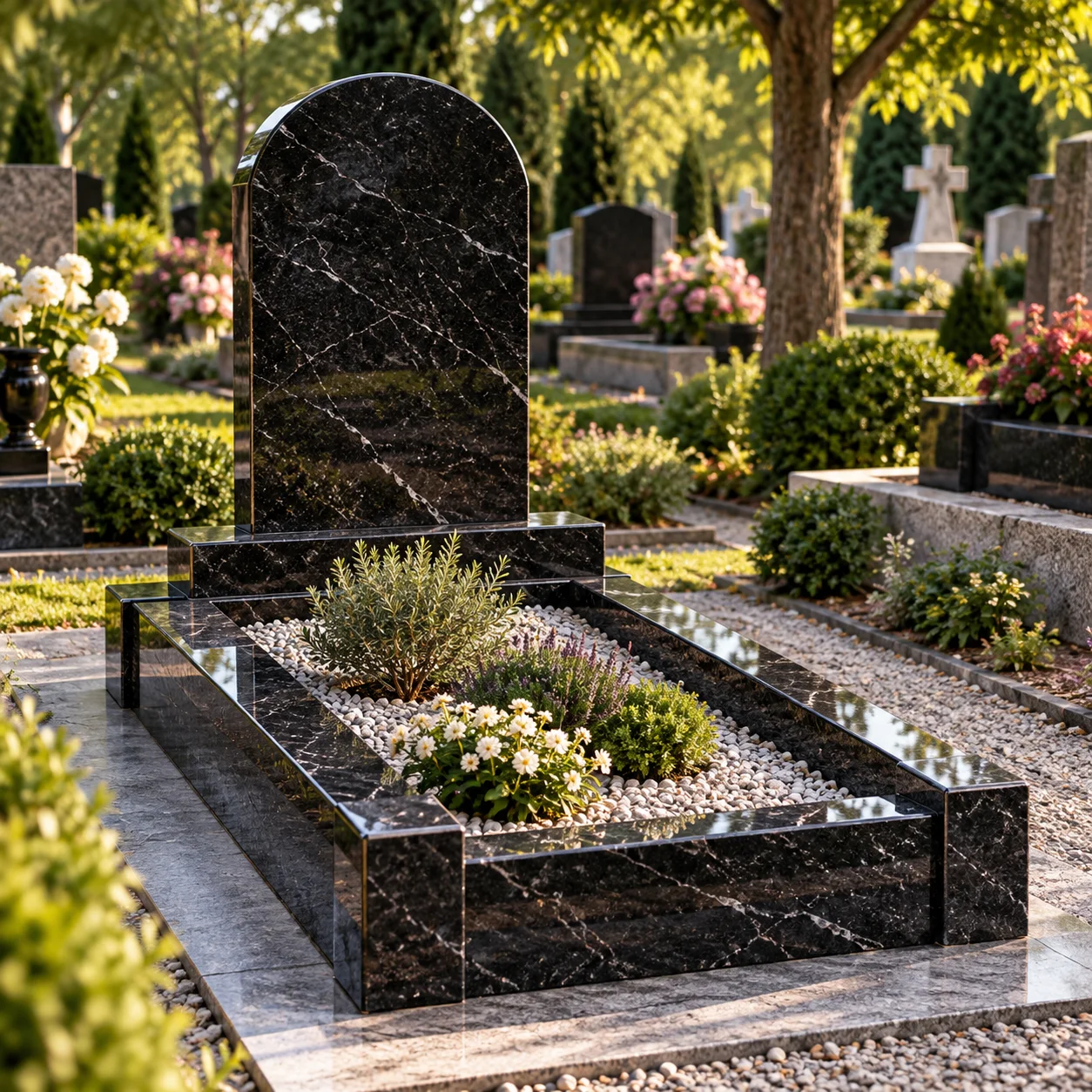 Kerb with chippingsKerbs with a tray for gravel or planting
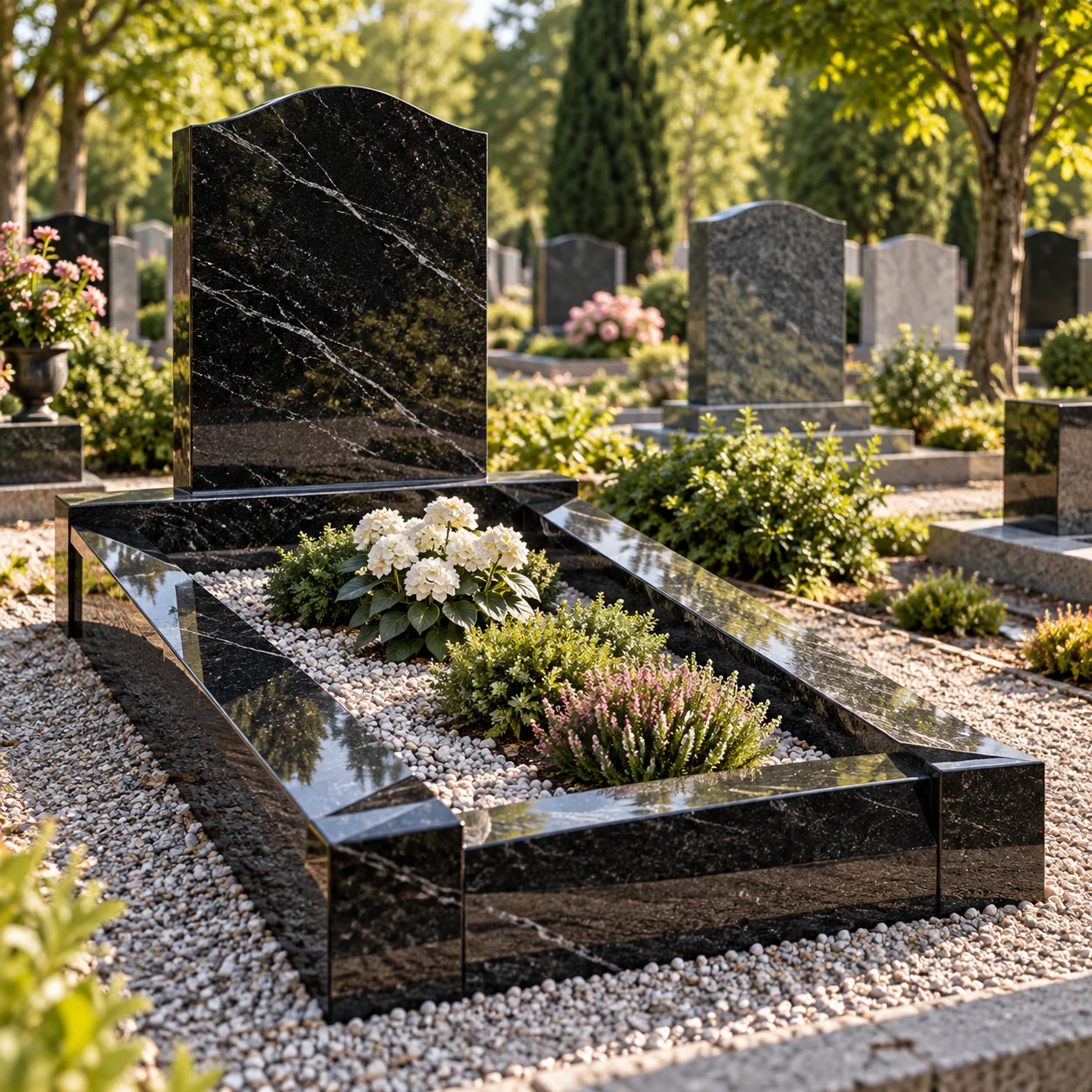 Slant kerbKerbs cut with a sloped top face
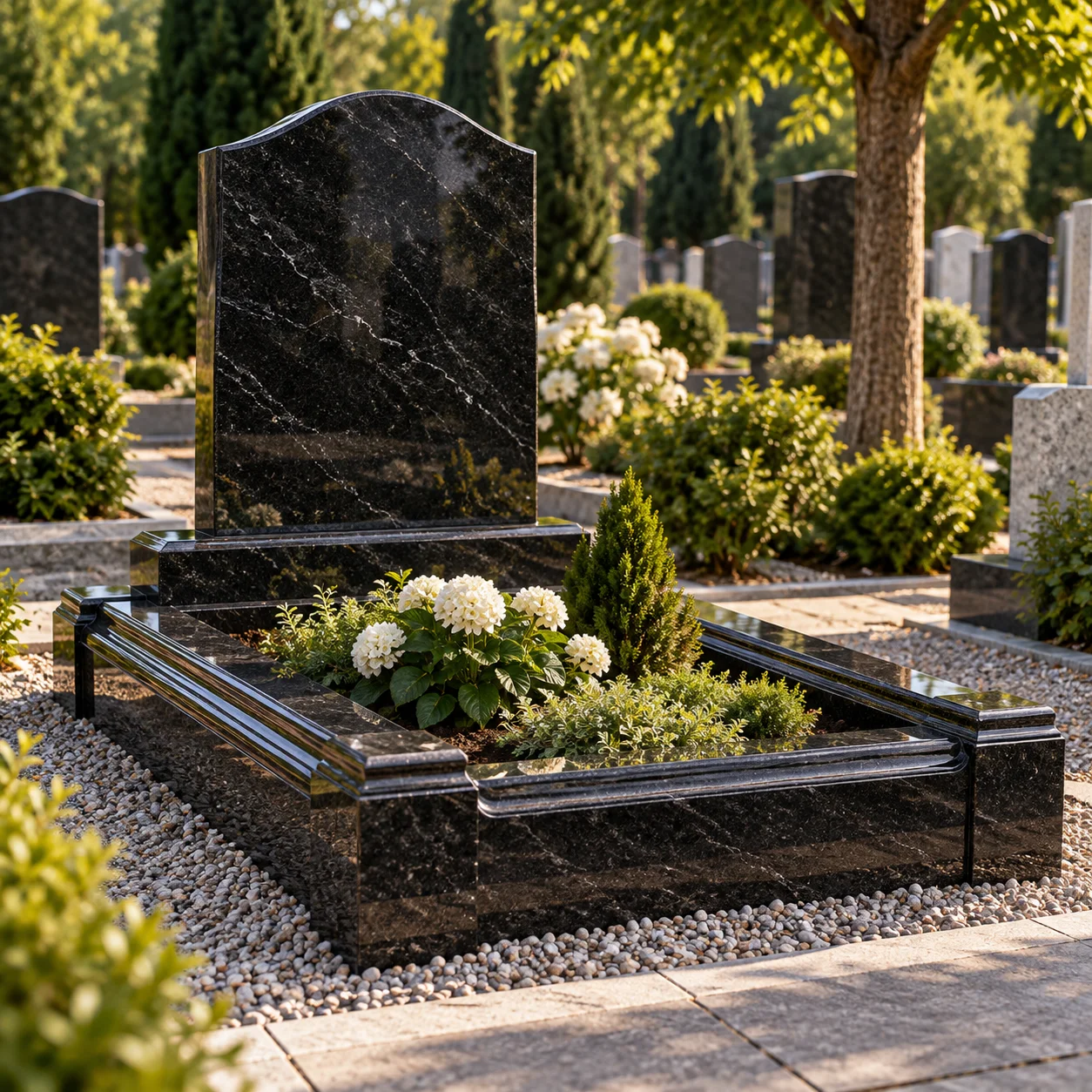 Moulded kerbOgee, half-round or bullnose profiles
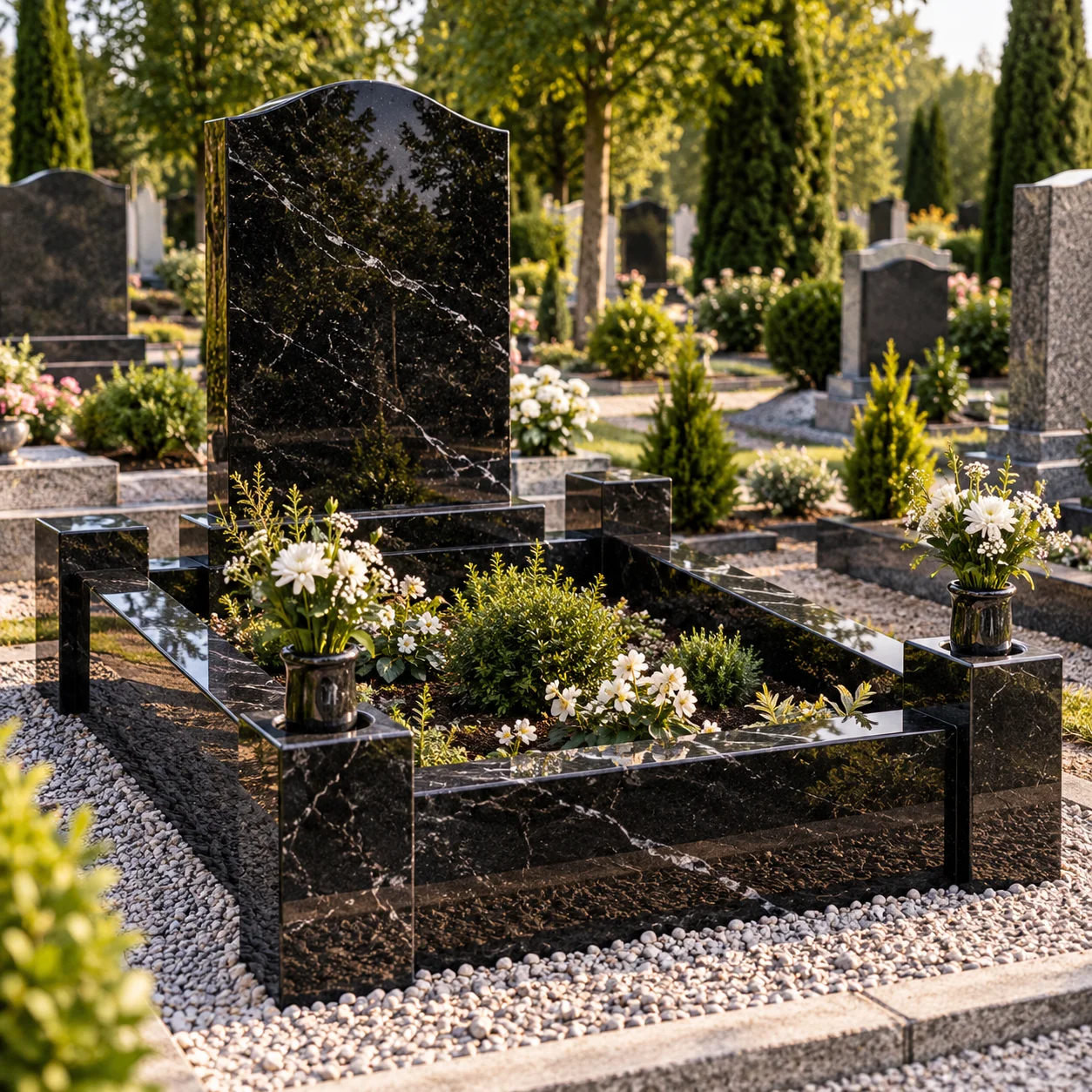 Kerb with vasesRecesses cut for vases in the kerb line
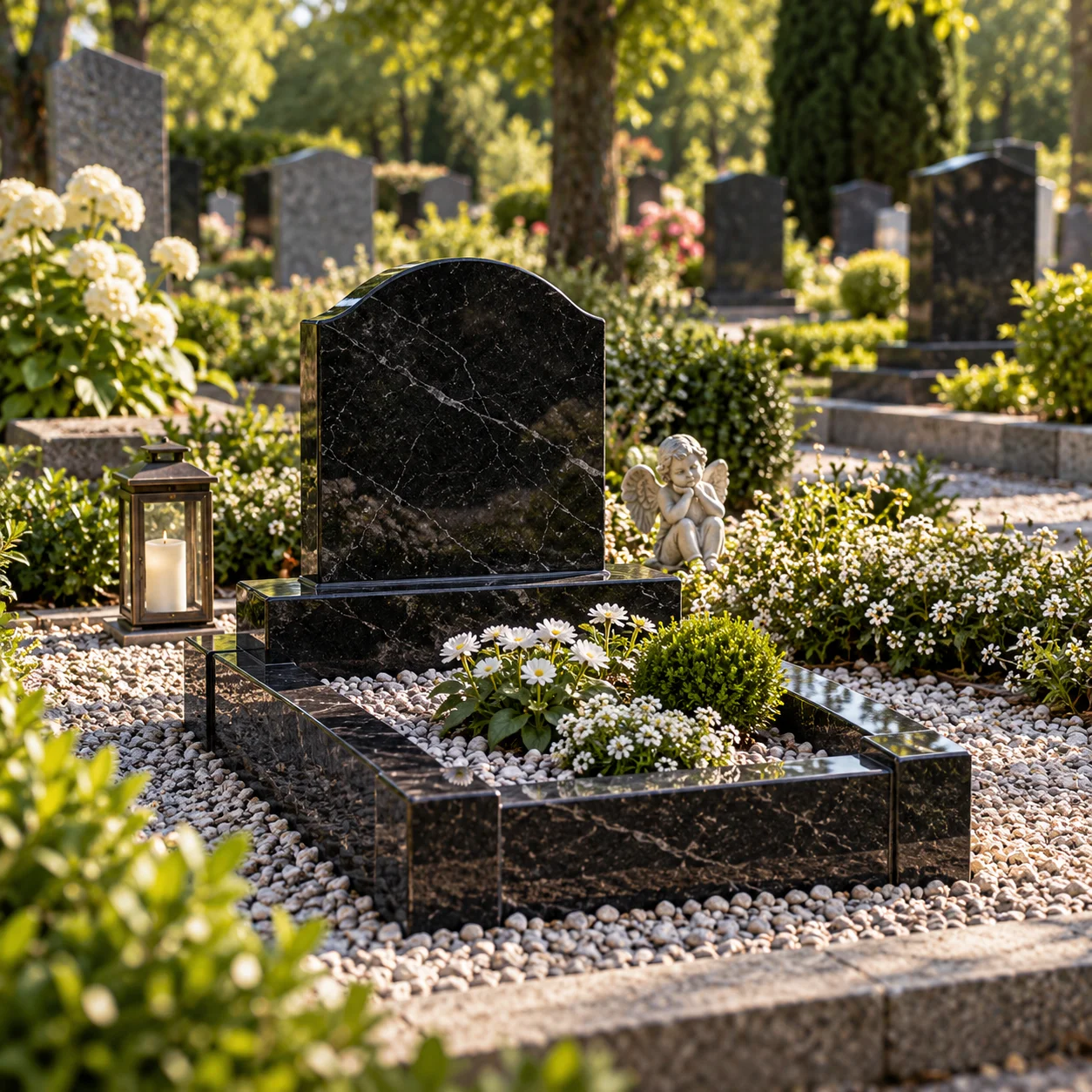 Children's setSmaller kerbs to a child's plot size
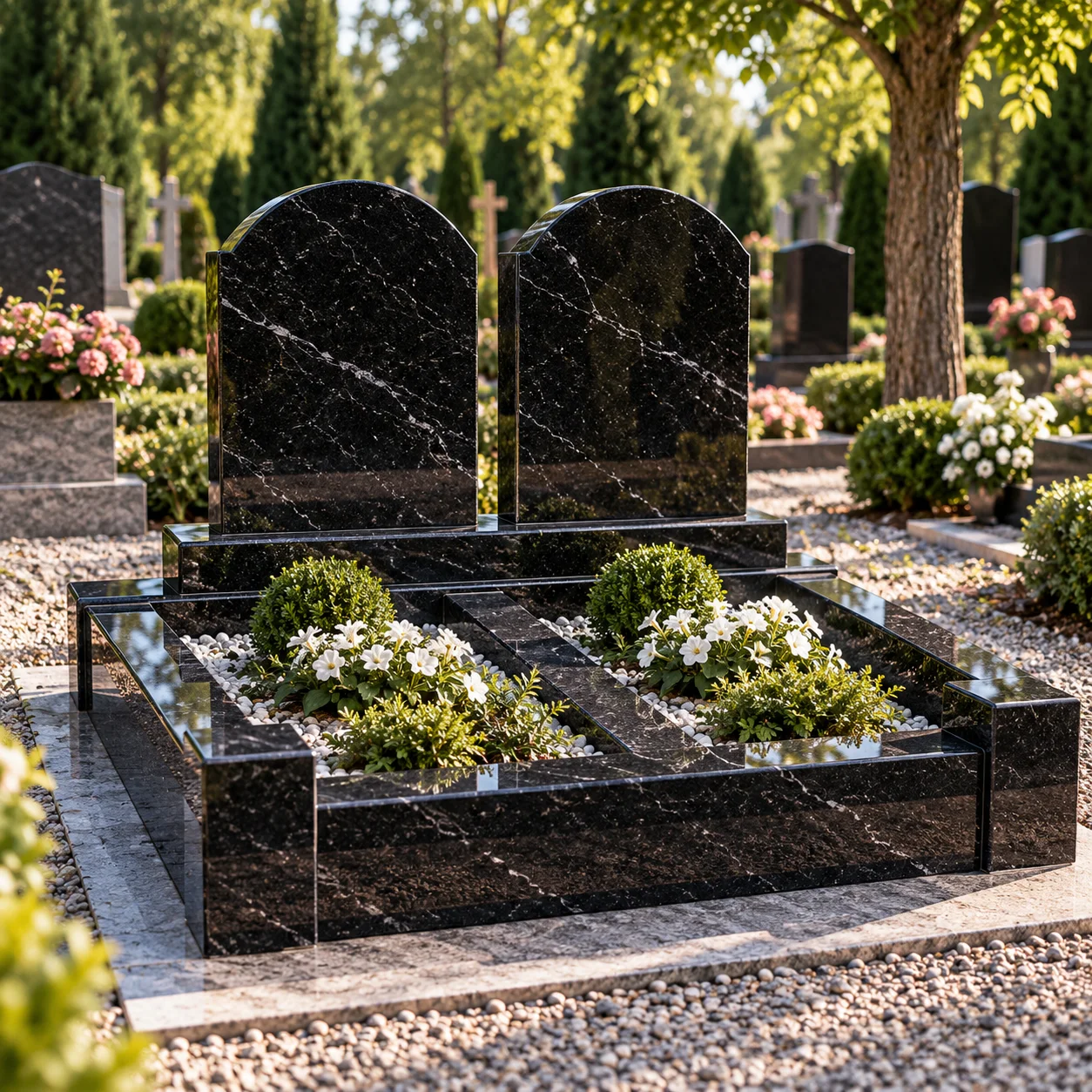 Double grave setOne surround across two plots
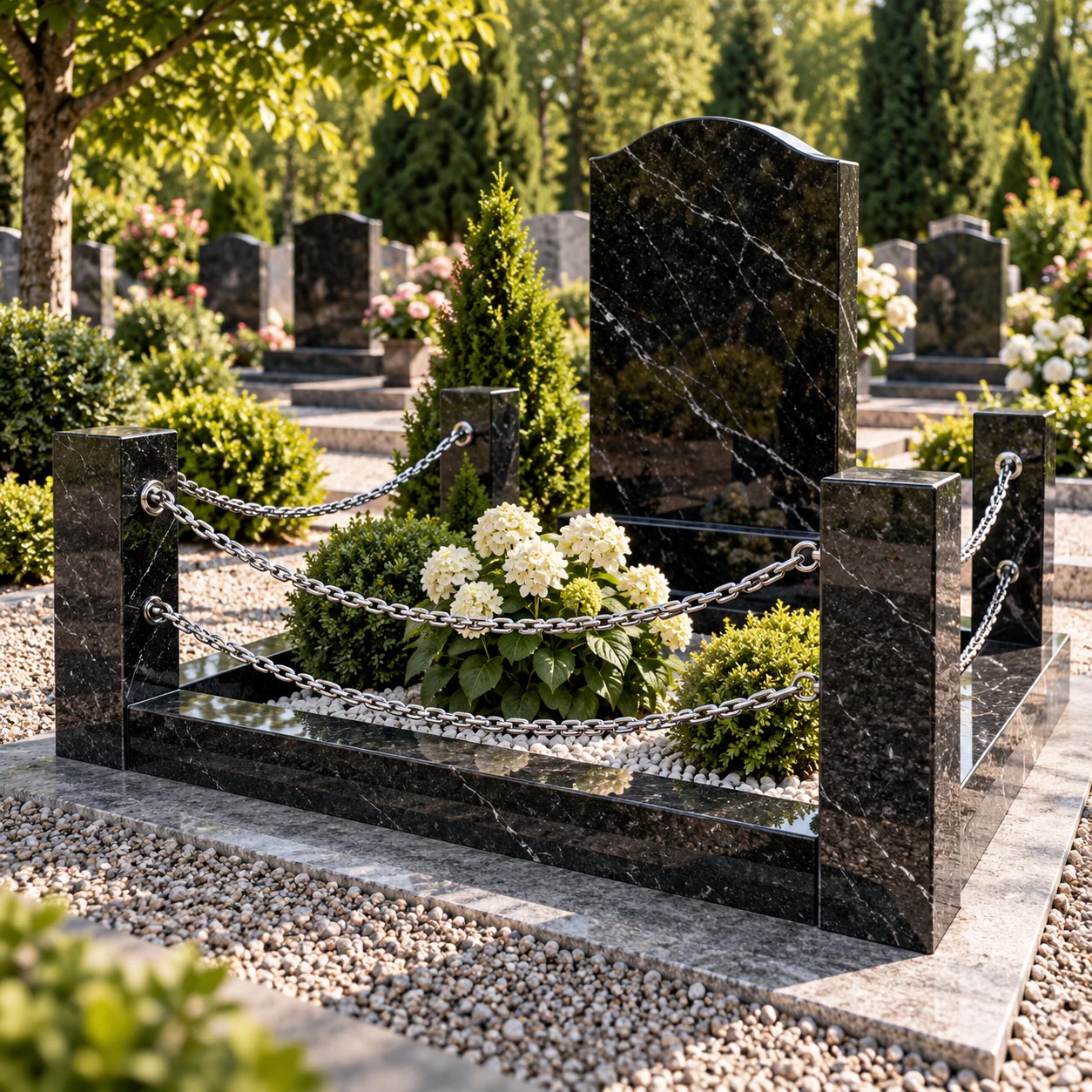 Posts & chainPosts with a chain or rail between them
What a full set
is actually made of.
Six pieces and a headstone. Each one is a separate line on the quotation, and each one is cut from the same block run.
- Head kerbSits under the headstone base, usually the heaviest section in the set.
- Side kerbsCut to the plot length, mitred or butted at the corners as your setter prefers.
- Foot kerbOften carries the second inscription or the family name.
- Corner postsOptional, with or without a chain run between them.
- InfillCover slab, chipping tray or left open for planting — decide before cutting, it changes the kerb depth.
Four kerb profiles,
in section.
The profile changes the price more than the length does. Square is standard; moulded work takes the longest.
Kerbs are commonly 4 × 3 in or 6 × 4 in section on a 6 ft or 7 ft plot, but cemetery rules decide this, not us — send the sheet and the drawing comes back inside it.
Mitres closed here,
not in the cemetery.
A kerb set is only as good as its corners. Every set is laid out and dry-fitted at the works before it is numbered and crated.
- 01Plot sizesGrave size and cemetery rule
- 02DrawingKerb lengths and mitres set
- 03BlocksReserved for the whole set
- 04CuttingKerbs, posts and cover
- 05ProfilingChamfer, round or moulded
- 06LetteringFoot kerb or cover, if any
- 07Dry fitMitres closed at the works
- 08CratingNumbered piece by piece
Match the headstone,
not the catalogue.
Kerbs sit beside the memorial for decades. Ordered together they come off the same block; ordered a year apart they rarely match.
Send the plot size
and the cemetery's rule.


